How to Write a Bag Tech Pack and Custom Brief
What to send, what to measure and what to leave open before your first quote. Includes a worked brief and a revision checklist.
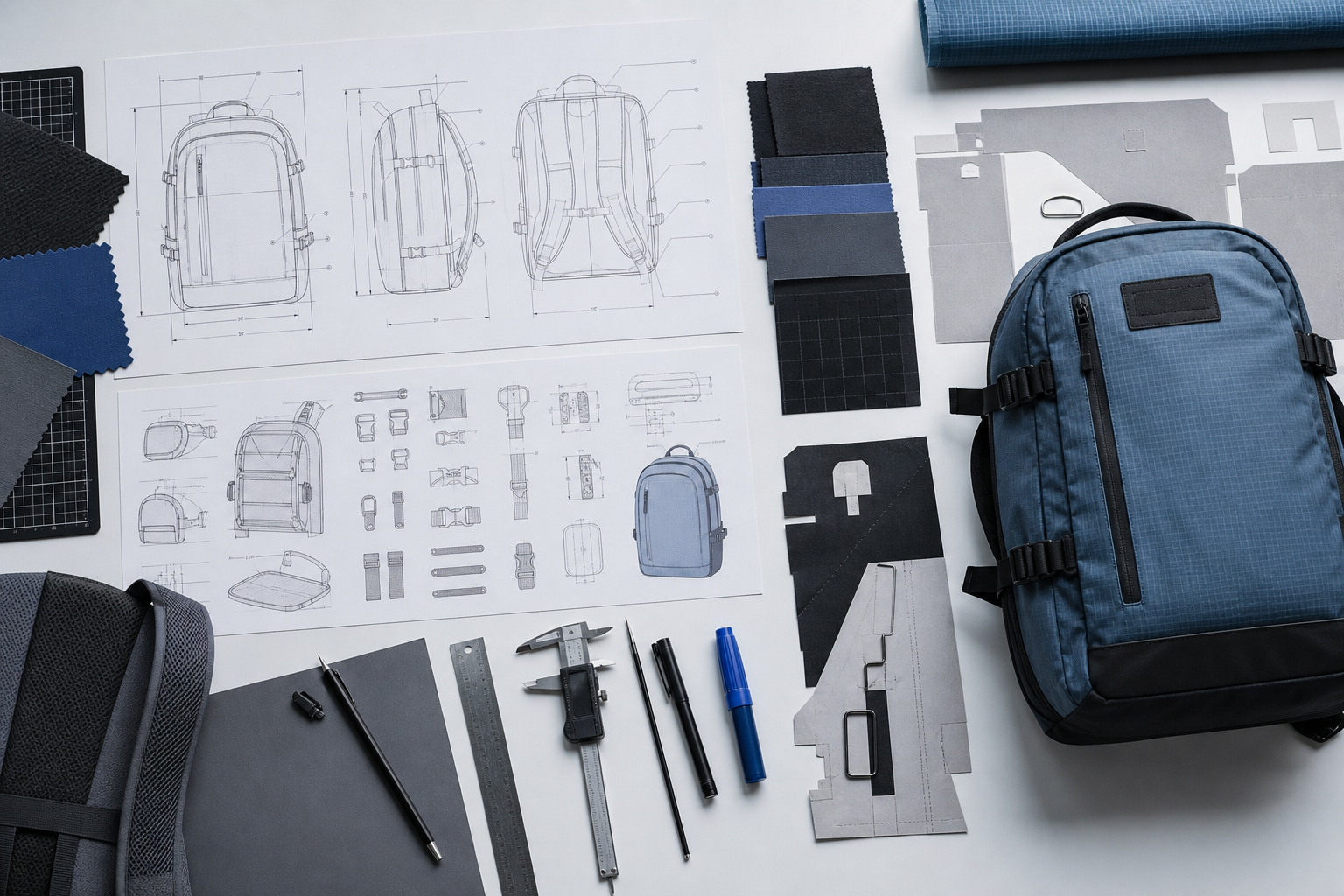
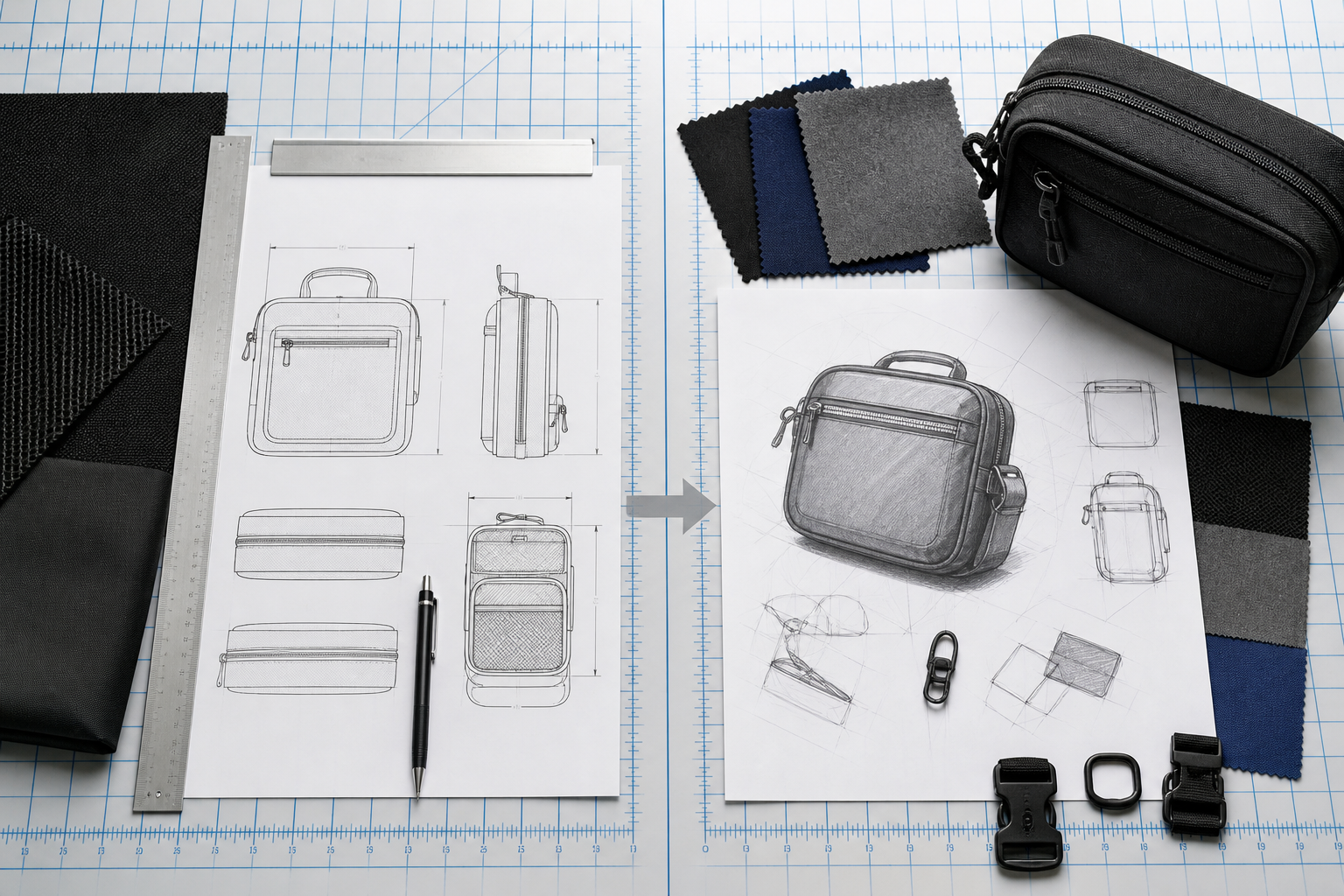
A photo tells a sample maker what a bag looks like. It rarely tells them what has to fit inside, how the handles should feel when loaded, or which details can change to meet a budget. Those decisions belong in the brief.
You do not need a beautifully designed technical document to start. A few annotated photos, a measurement sheet and a list of priorities can be enough for an initial discussion. The important distinction is between a request for an estimate and an instruction to make the final product. Do not let an early estimate quietly become a production specification.
Start with the load, not the adjective
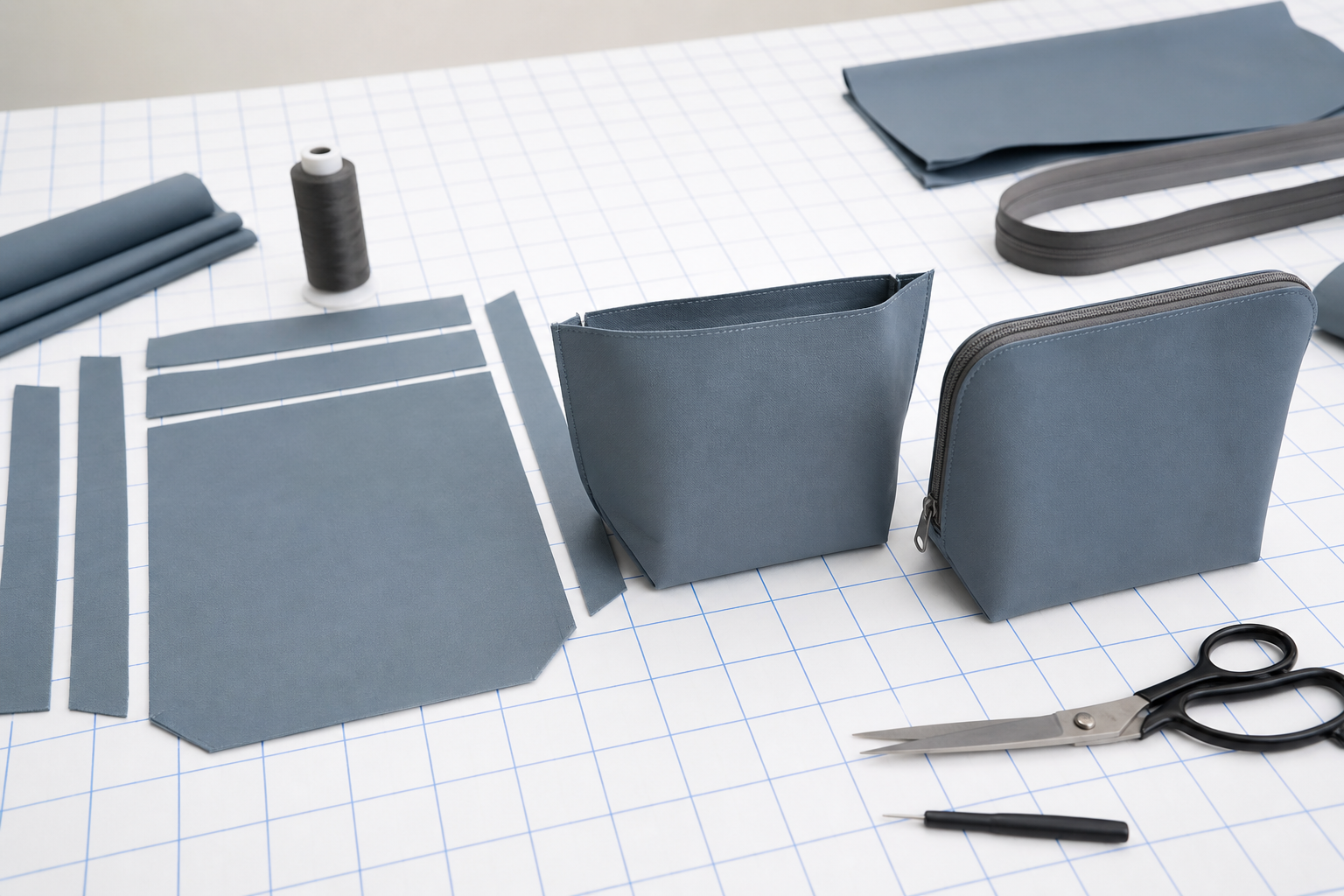
“Premium work tote” leaves a lot to interpretation. Write down what the user carries and when they carry it. For a commuter bag, that might mean a laptop in its protective case, a charger, a filled bottle and a folded jacket. For a cosmetic pouch, it could be a particular bottle set that must stand upright without stretching the zip.
Measure the actual items. A laptop's advertised screen size does not define its outside dimensions, and a bottle's capacity does not tell the sample maker its diameter. Supply the objects or their measurements when fit is important. Explain how they should be arranged and which pocket needs to be reachable without opening the main compartment.
Choose two or three non-negotiables. If bottle access matters more than a completely clean exterior, say so. This gives the developer a useful basis for proposing a trade-off.
Measure the useful space
Show width, height and depth on the same drawing. State whether these are finished external dimensions or usable internal dimensions. Padding, lining and curved seams take up space; the outside size alone does not establish what fits.
Add handle drop, strap adjustment range, pocket opening and zip opening where they affect use. A roomy pouch with a narrow opening can still be awkward to pack. For a bottle pocket, specify the intended bottle and ask for a fit check, not just a flat pocket width.
Avoid applying one tolerance to every measurement. A sewn body panel and a fitted device sleeve may need different allowances. Agree the measurement method and acceptable variation with the sample team before approving the production reference.
Bag tech pack checklist: a worked brief
The example below is a fictional development brief, not a finished Truedrape specification or a quoted offer.
| Item | Example instruction | Decision status |
|---|---|---|
| Use | Office tote specification for carrying a device, bottle and light clothing | Confirmed use case |
| Body | Target 380 × 320 × 140 mm, width × height × depth, external | Check after sampling |
| Device fit | Buyer to supply the device dimensions including its case | Open before pattern approval |
| Main fabric | Compare two canvas weights with a soft but self-supporting feel | Factory to propose swatches |
| Interior | One padded device sleeve and one zipped pocket | Confirm locations on drawing |
| Handles | Shoulder carry over a jacket; review loaded handle drop | Confirm on physical sample |
| Branding | One-color print, artwork supplied separately | Placement and ink trial needed |
| Order | One style, two colors, quantity split supplied with RFQ | Feasibility to confirm |
| Packing | Fold only if it does not permanently mark the body or print | Review packed sample |
Replace the example with your requirements. Give the style a short reference code so the same name appears on drawings, sample feedback and quotation files. If there are two sizes, make two measurement schedules; “same but smaller” leaves too much undecided.
Specify the parts people will touch
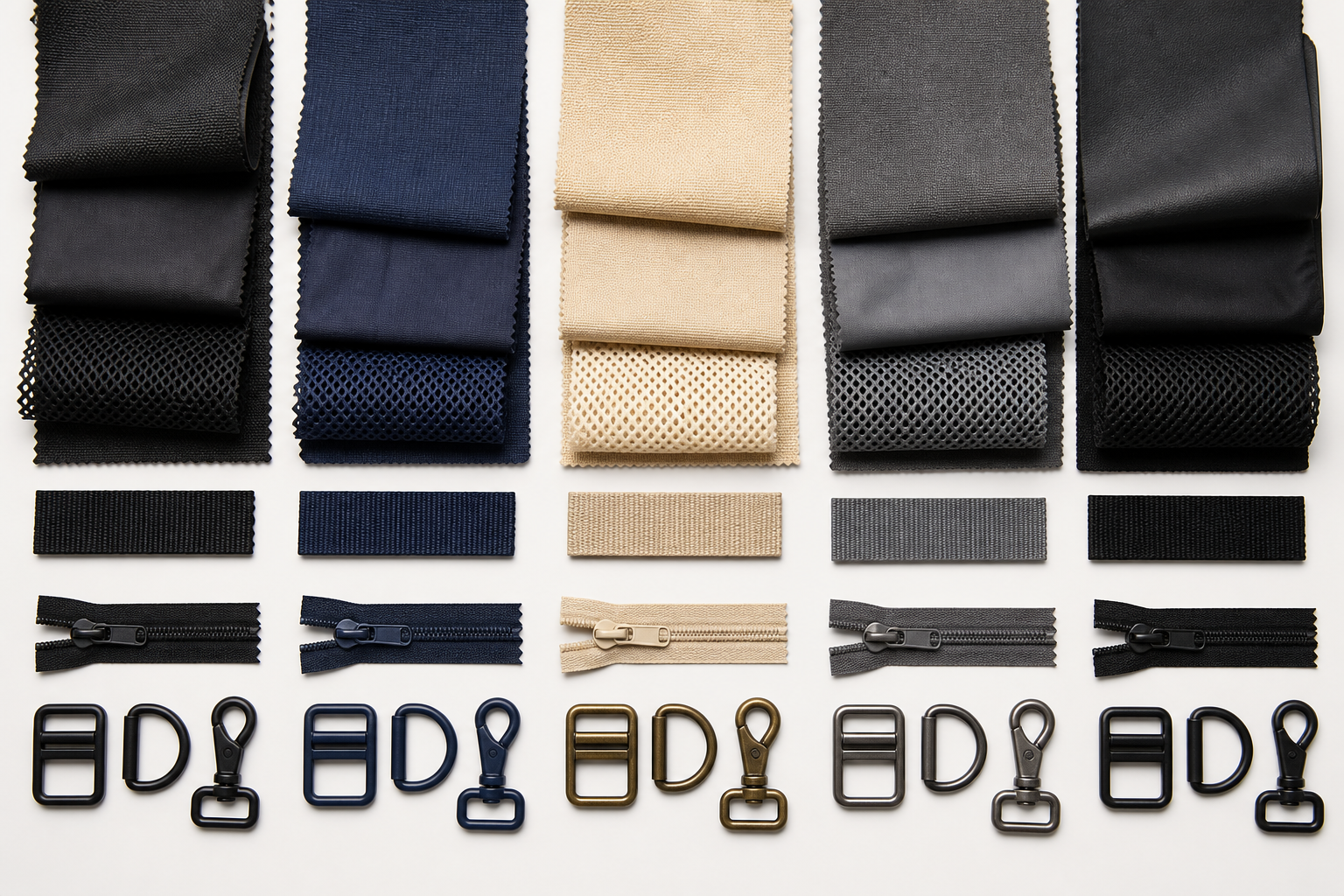
Do not stop at the shell fabric. List the lining, padding, zipper, puller, webbing, binding and any rigid support. Note which components contact the contents and which carry the load.
You can leave a material open without leaving its job open. “Please propose a light-colored lining that makes small items easier to find” is more useful than “standard lining.” Ask the factory to identify the material offered in its quotation so later price comparisons refer to the same construction.
For branding, include the original artwork, intended method, finished size and placement measured from a seam or edge. A logo pasted onto a perspective photo is a visual reference, not a placement instruction. If fine lettering matters, request an actual application trial on the selected fabric.
Keep open questions visible
Use three statuses: confirmed, proposal required and buyer decision pending. Put a person and decision date against every open item. The date should support the sample schedule, not become a promise that the supplier has already accepted.
Ask the supplier to return its assumptions with the first quote. Does the price include lining, custom packaging, a printed logo and the requested inspection? Is the material available in the proposed color, or is that subject to a separate purchase minimum? Clear exclusions are useful information, not a reason to hide uncertainty.
Issue one revision after feedback
When the sample arrives, collect feedback into one file. Use numbered photos and measurable instructions. “Move the pocket opening 15 mm lower” is reviewable; “the inside still feels wrong” is not.
Before approving bulk, check that the latest drawing, component list, artwork and physical sample agree. Archive earlier revisions so nobody opens an obsolete attachment by mistake. Record any accepted difference explicitly; a verbal approval does not update the drawing.
Before sending your brief, check:
- Every view shows the same pocket and handle arrangement.
- Measurements have units and fixed start/end points.
- Quantity, color split, delivery destination and required arrival date are included.
- Unconfirmed materials and artwork are marked as unconfirmed.
- One person consolidates approval and revision comments.
If you only have a reference photo today, start there and say what is missing. Use the sampling guide to plan the next decision, or send your brief for a project review.