Truedrape works with an affiliated China-based bag factory under common ownership with Forthright. This connection supports made-to-order development from an approved product direction through material preparation, sewing, finished-goods handling and shipment coordination. Photographs supplied by Truedrape show bag-production and sample areas, with general affiliated support facilities identified separately.
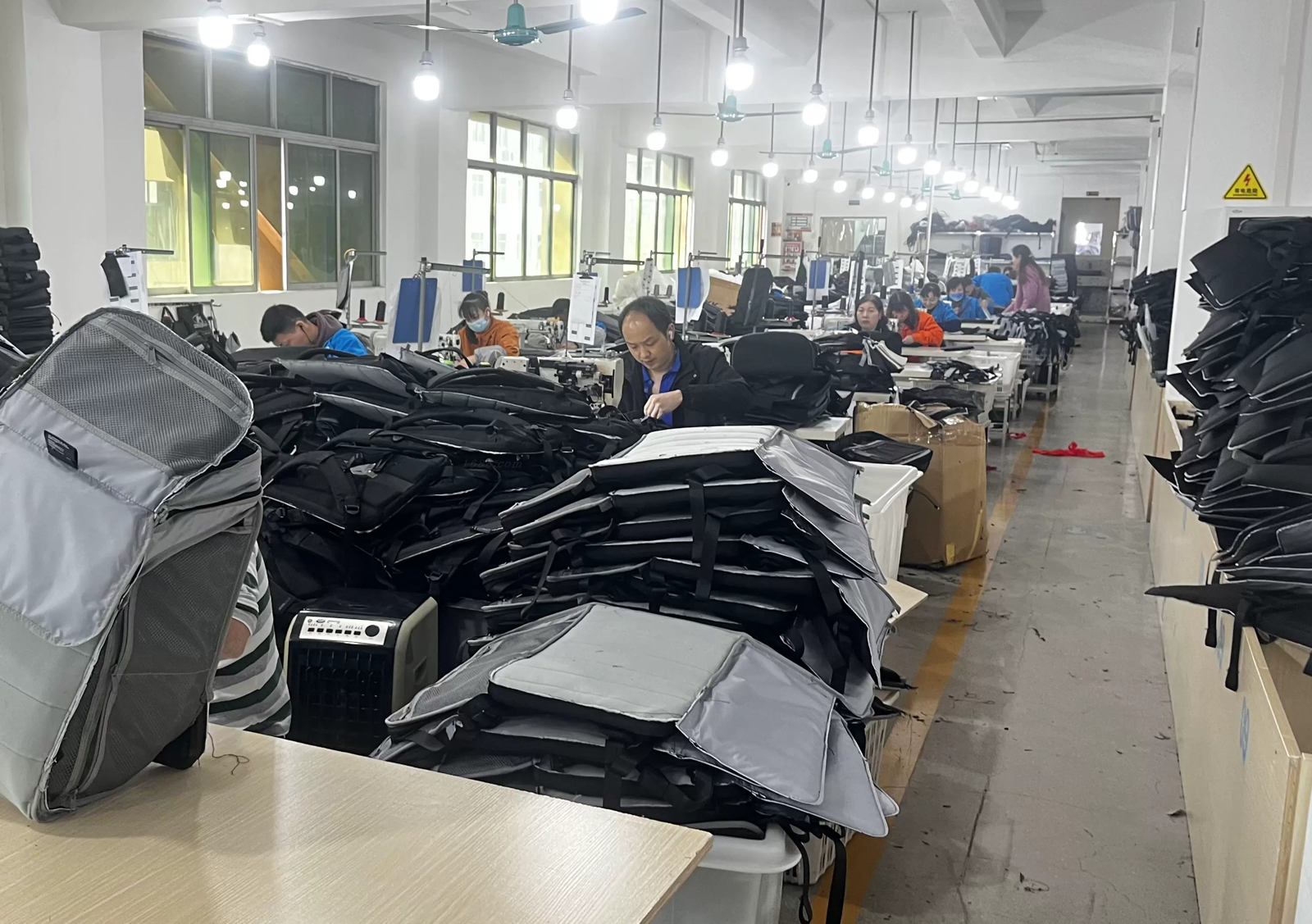
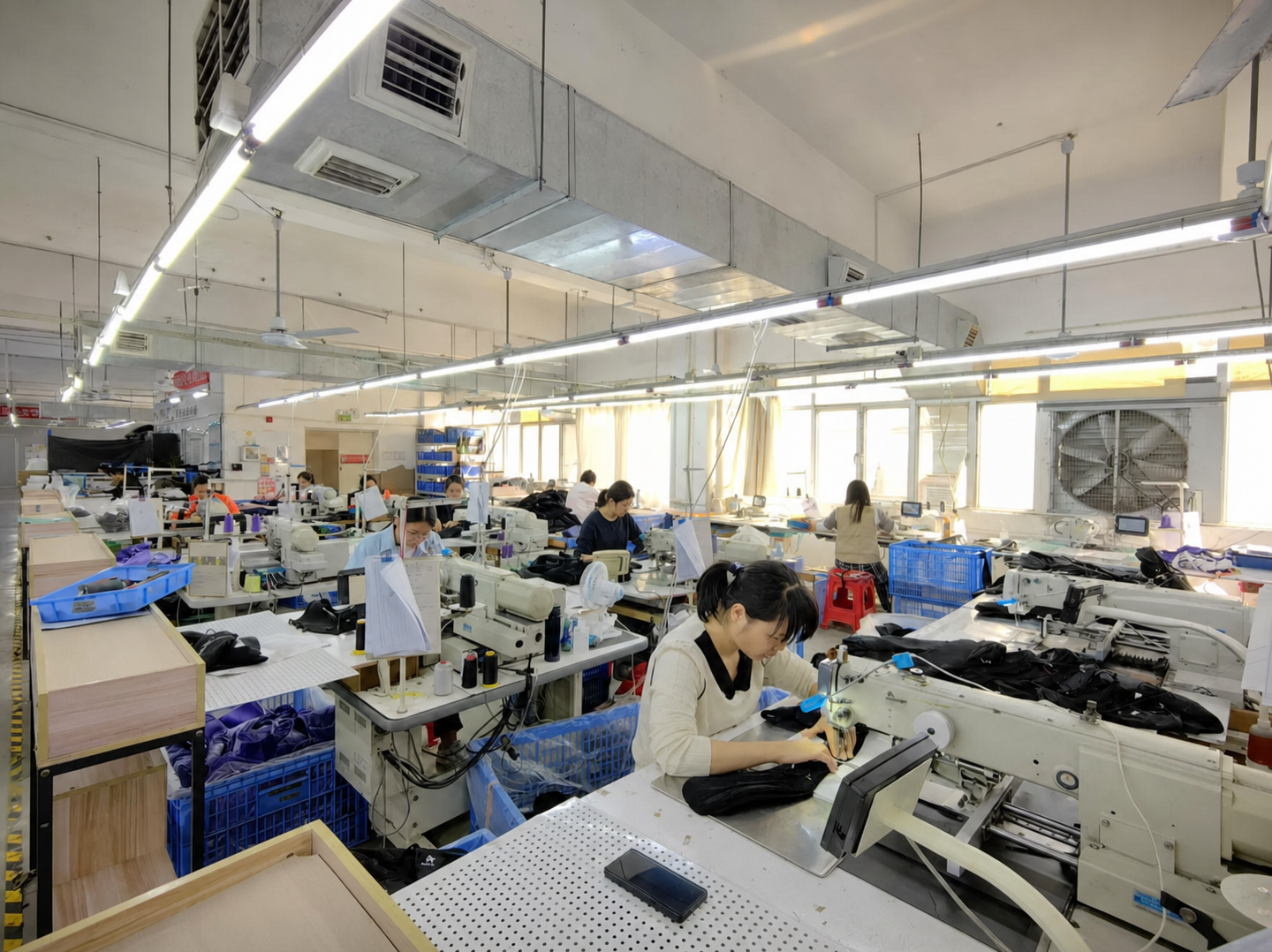
Active bag sewing and assembly floorMade to order
Production model
Made to order
Product focus
Practical textile bags
Monthly capacity
Up to 200,000 pcs
Sample rooms
See the range before defining your own
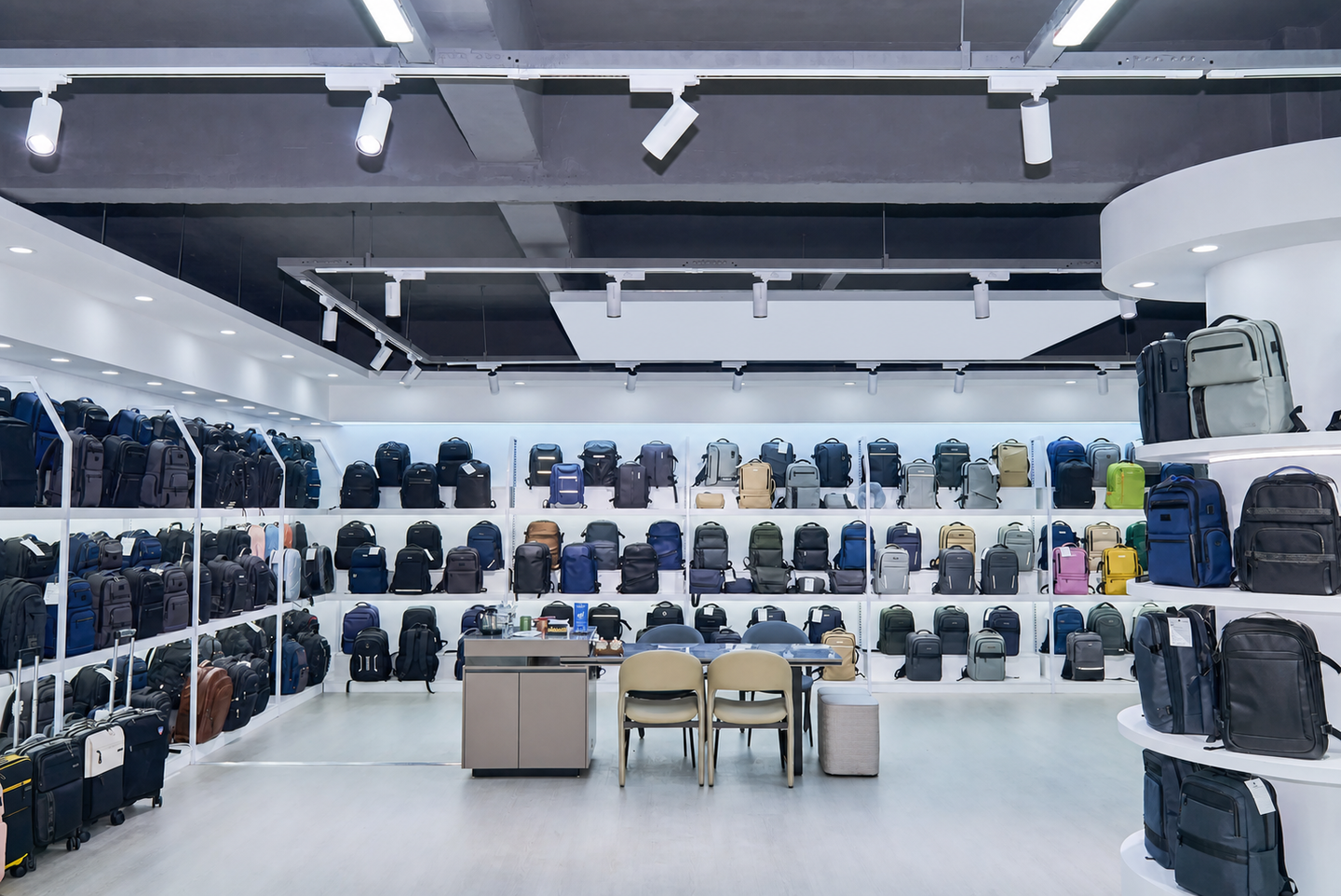
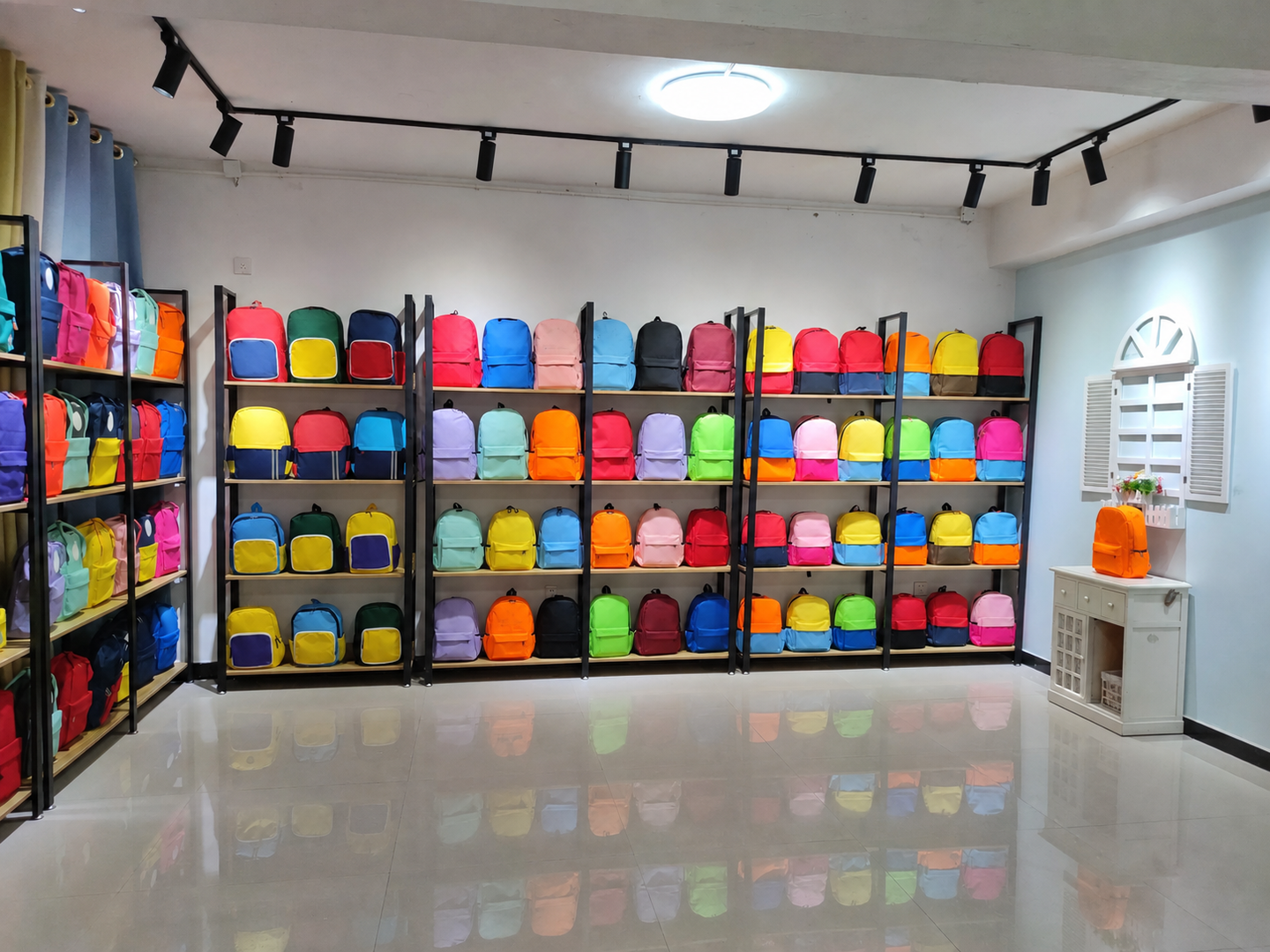
Backpack samples show different constructions, proportions and color combinations. They are useful starting points for a development conversation, not a ready-stock offer. Your own specification is confirmed through sampling.
Construction and carrying formats
Sample-room overview for discussing shape, access and organization.
Color and panel combinations
School-bag references for discussing fabric colors and pocket layouts.
Production route
A production route buyers can follow
A custom bag does not move from a picture straight into bulk production. The approved sample and recorded decisions create the starting point, then materials, panels, construction and finished goods move through connected stages. The photographs below show real parts of that environment. They illustrate the route without claiming that one image proves every control used for every order.
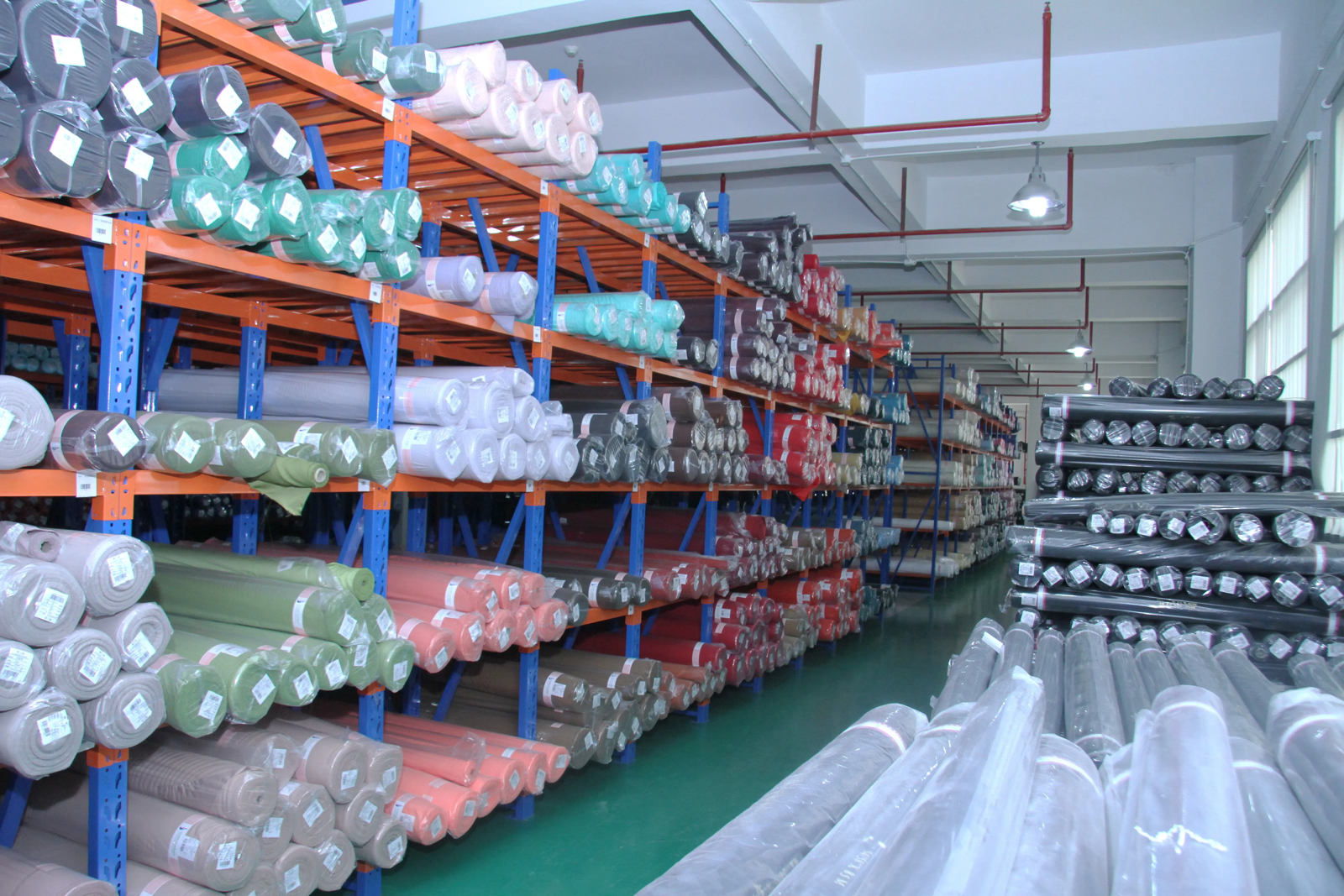
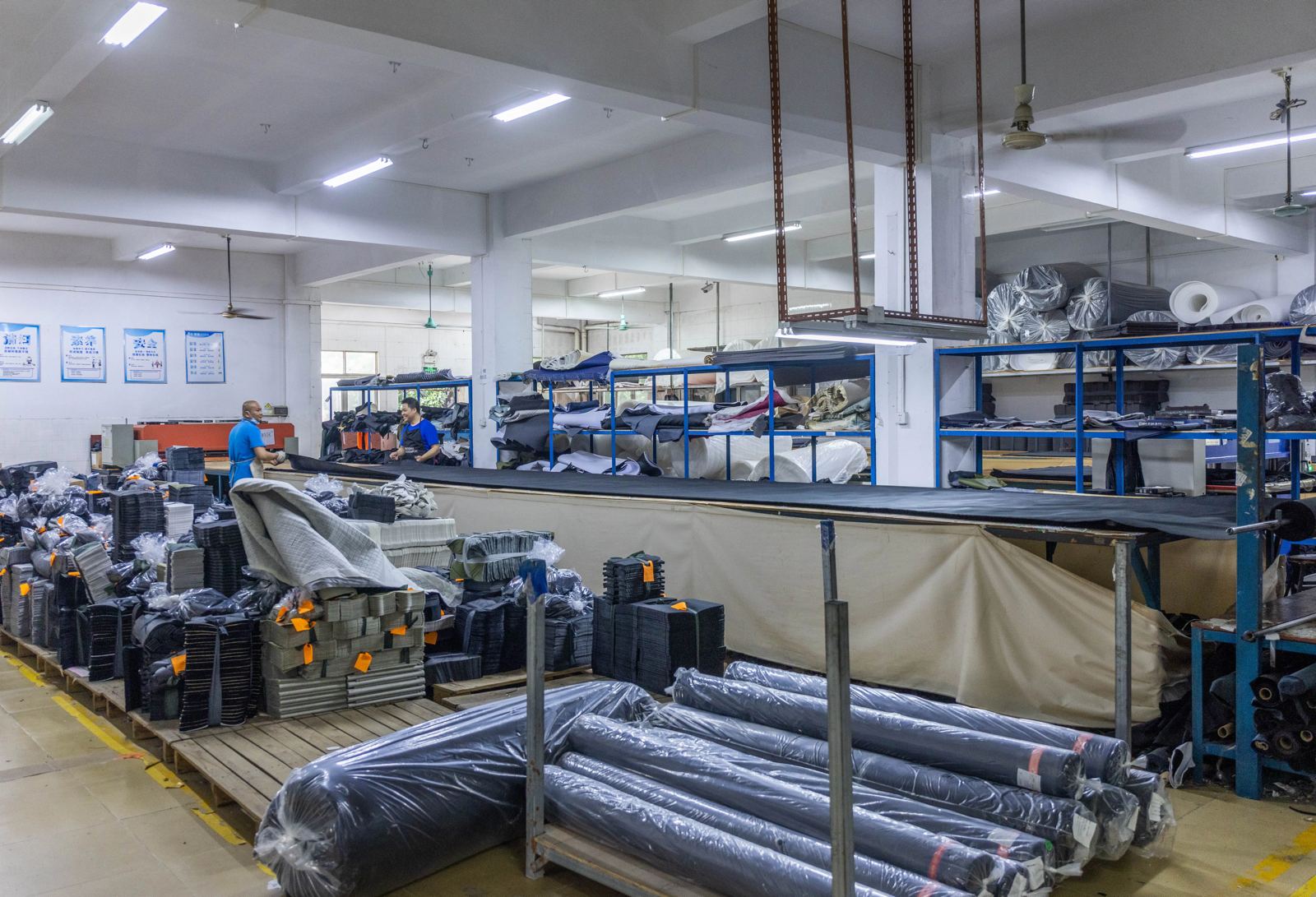
Material-roll storage
01
Materials
Materials are organized before production decisions move forward
Main fabric, lining, webbing, zipper and hardware choices affect construction, appearance, cost and lead time. Available materials are reviewed against the approved direction before bulk work begins. Color references, coating, weight, hand feel and functional requirements may need physical confirmation because screen images and written descriptions cannot establish every material characteristic.
Prepared materials and cut panels
02
Preparation
Panels and components are prepared around the approved construction
Pattern pieces, reinforcement areas, webbing lengths, pocket components and other prepared parts need to match the agreed construction. Grouping the required components gives the production team a clearer route into assembly and helps prevent an open development question from being treated as a finished instruction. Product complexity and material behavior still affect how preparation is arranged.
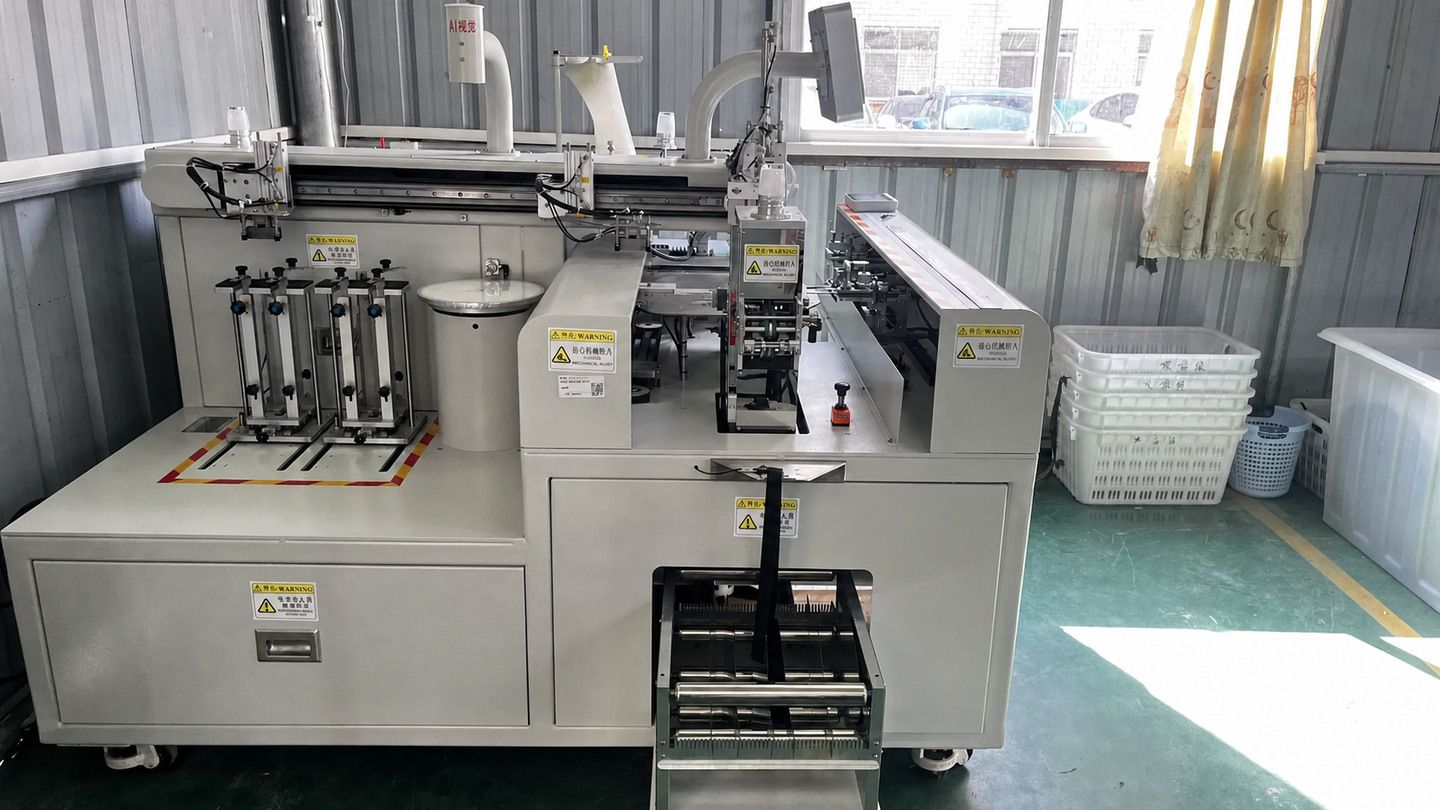
Component preparation equipment
A closer view of the equipment and material-feed arrangement.
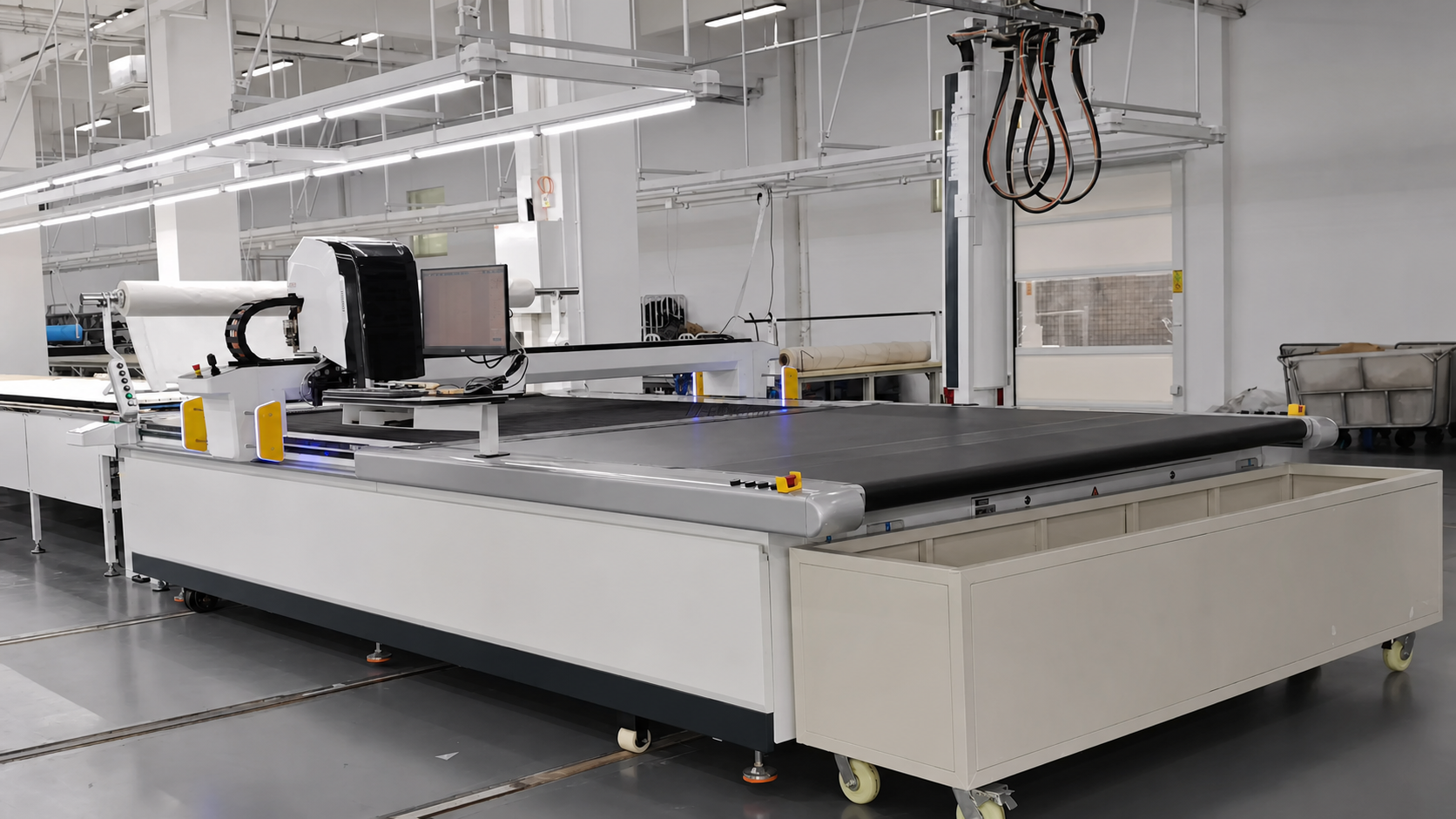
Digital cutting · support facility
General textile equipment; routing is confirmed for each bag programme.
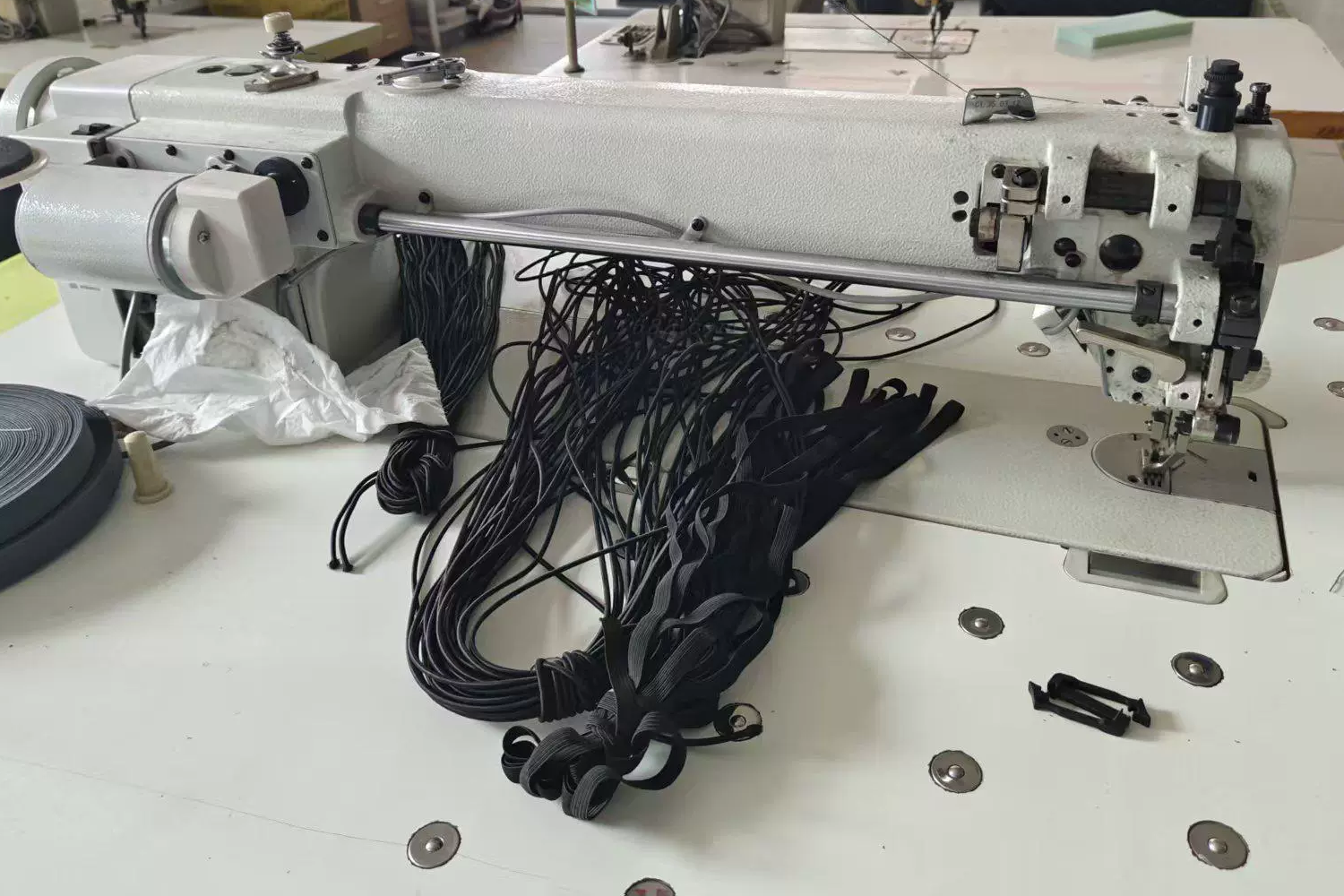
Industrial sewing and component assembly
03
Assembly
Sewing turns separate parts into a functional bag structure
Bag construction combines exterior panels, lining, pockets, binding, webbing, handles, straps, reinforcement and closures in a defined sequence. Different operations may require different machines or handling methods. The objective is not simply to close seams; it is to preserve the approved proportions, access, organization and carrying function while maintaining repeatable workmanship.
At the sewing stations
People, workstations and prepared parts in the bag-production environment.
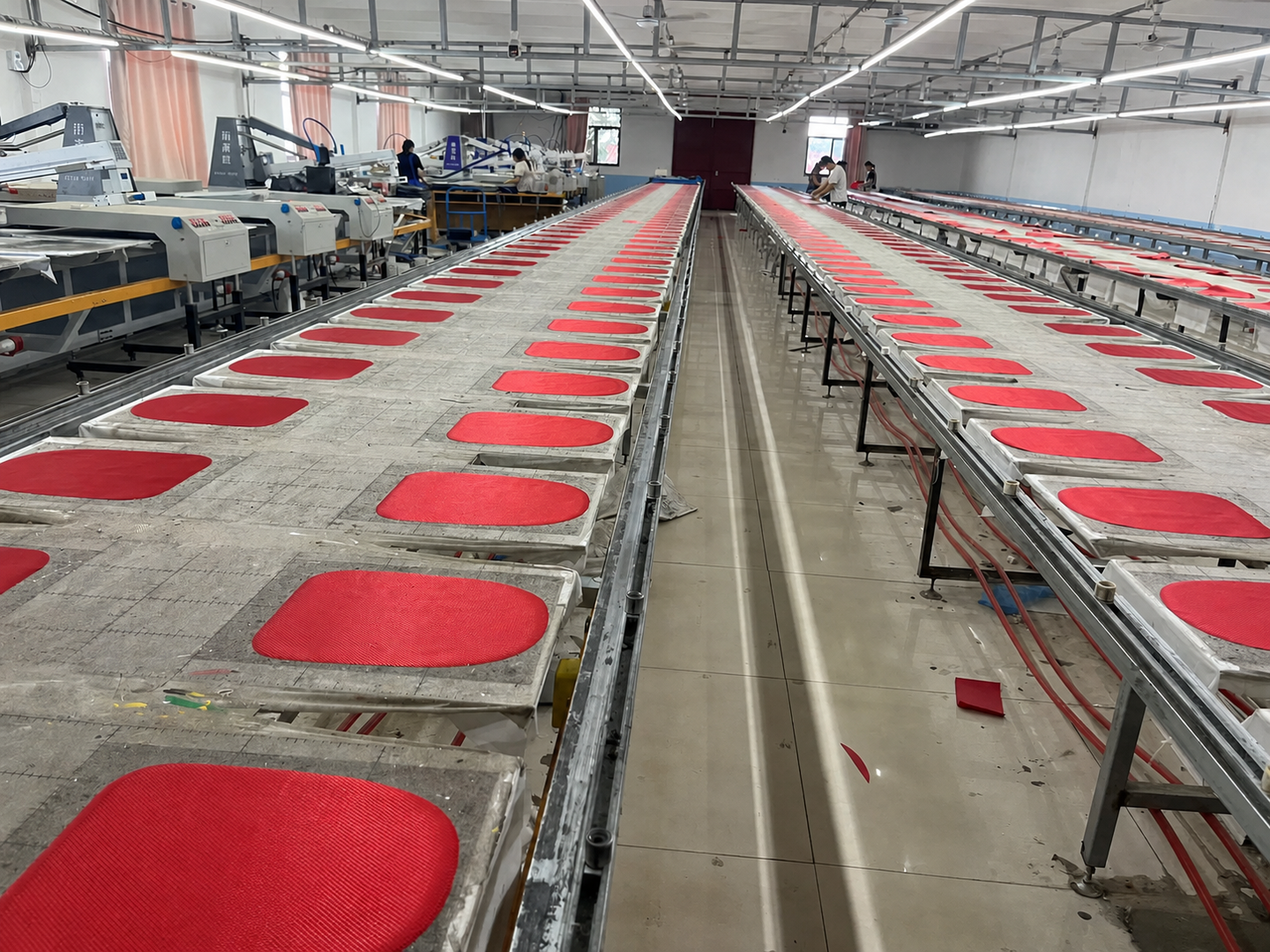
Panel printing work area
Decoration is planned around the panel and approved artwork before assembly.
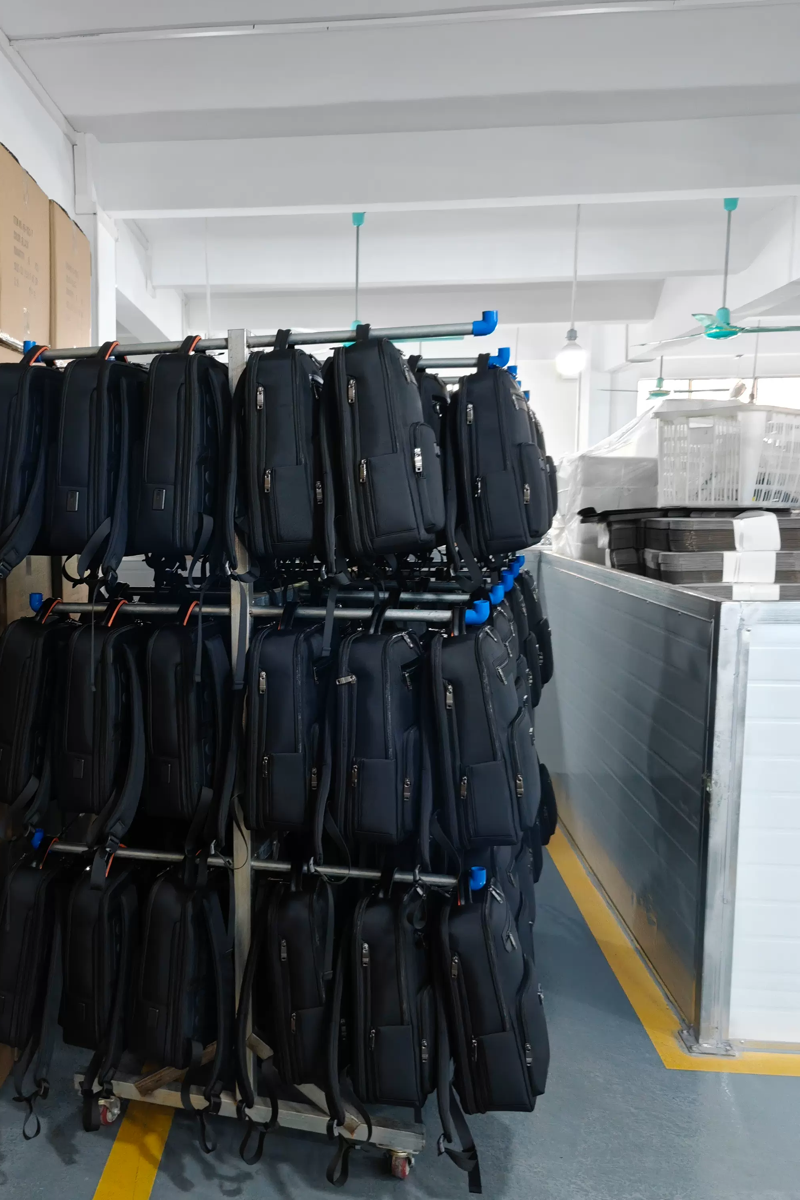
Finished backpacks awaiting the next handling stage
04
Finished goods
Finished bags stay identifiable before packing and dispatch
Completed goods need to remain connected to the approved product, color, quantity and packing direction. Finished-bag staging supports counting, handling and the move into packing. Packaging format, assortment, carton marks and shipment preparation are confirmed for the programme rather than assumed from a catalogue reference or a previous order.
A buyer needs more than access to a workshop. The useful part of the factory relationship is the ability to connect product decisions with a physical sample and a record that production can follow. Open questions are resolved before they silently become bulk assumptions, while later checks can refer back to what was actually approved.
Order staging and finished-goods organization
Reference 01
Materials and color
Approved fabric, lining, webbing, zipper, hardware and color decisions provide the reference for purchasing and preparation. Substitutions or material changes require review rather than silent replacement.
Reference 02
Dimensions and construction
Key measurements, pocket organization, reinforcement, seam treatment, closures and strap construction are recorded so the production direction is more specific than a front-view image.
Reference 03
Workmanship and branding
Stitching, edge treatment, stress points, logo size, position, color and application method need clear approval criteria. Physical execution is reviewed through sampling before scale.
Reference 04
Packing and order identity
Individual packing, labels, assortment, carton information and other shipment instructions remain linked to the correct product and order rather than handled as an unrelated final step.
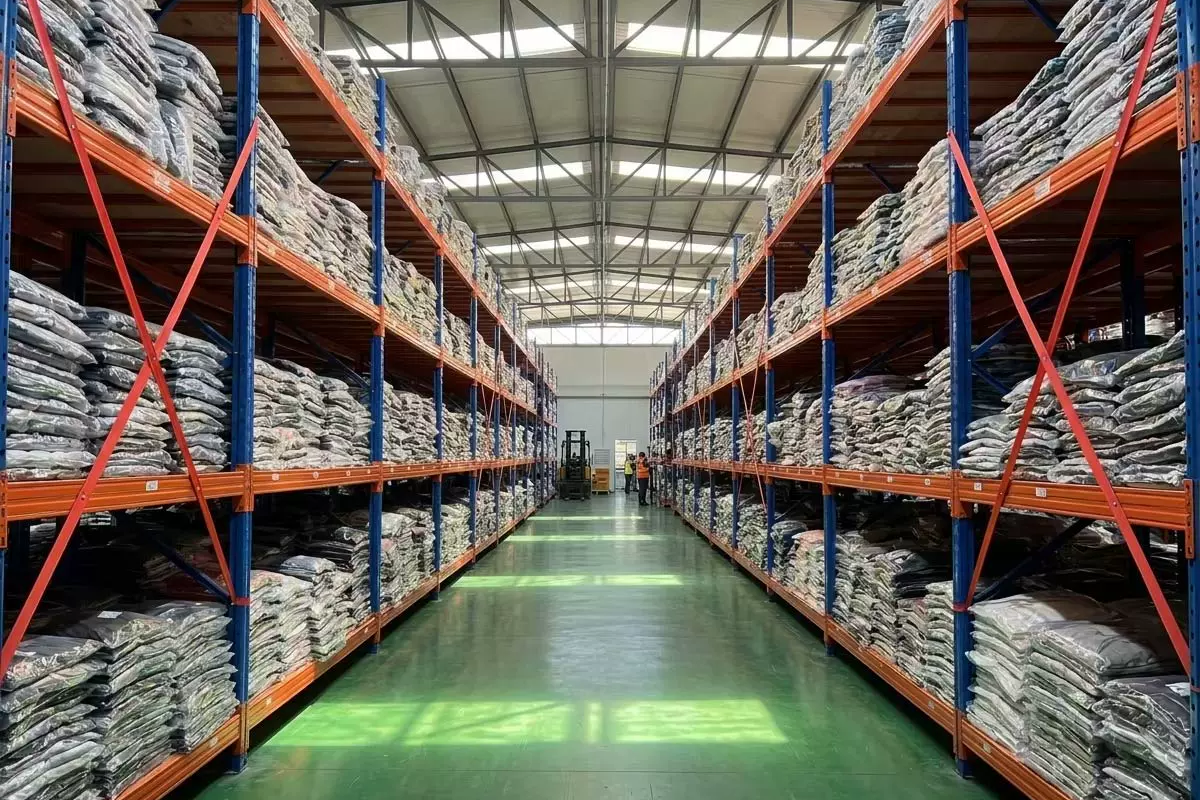
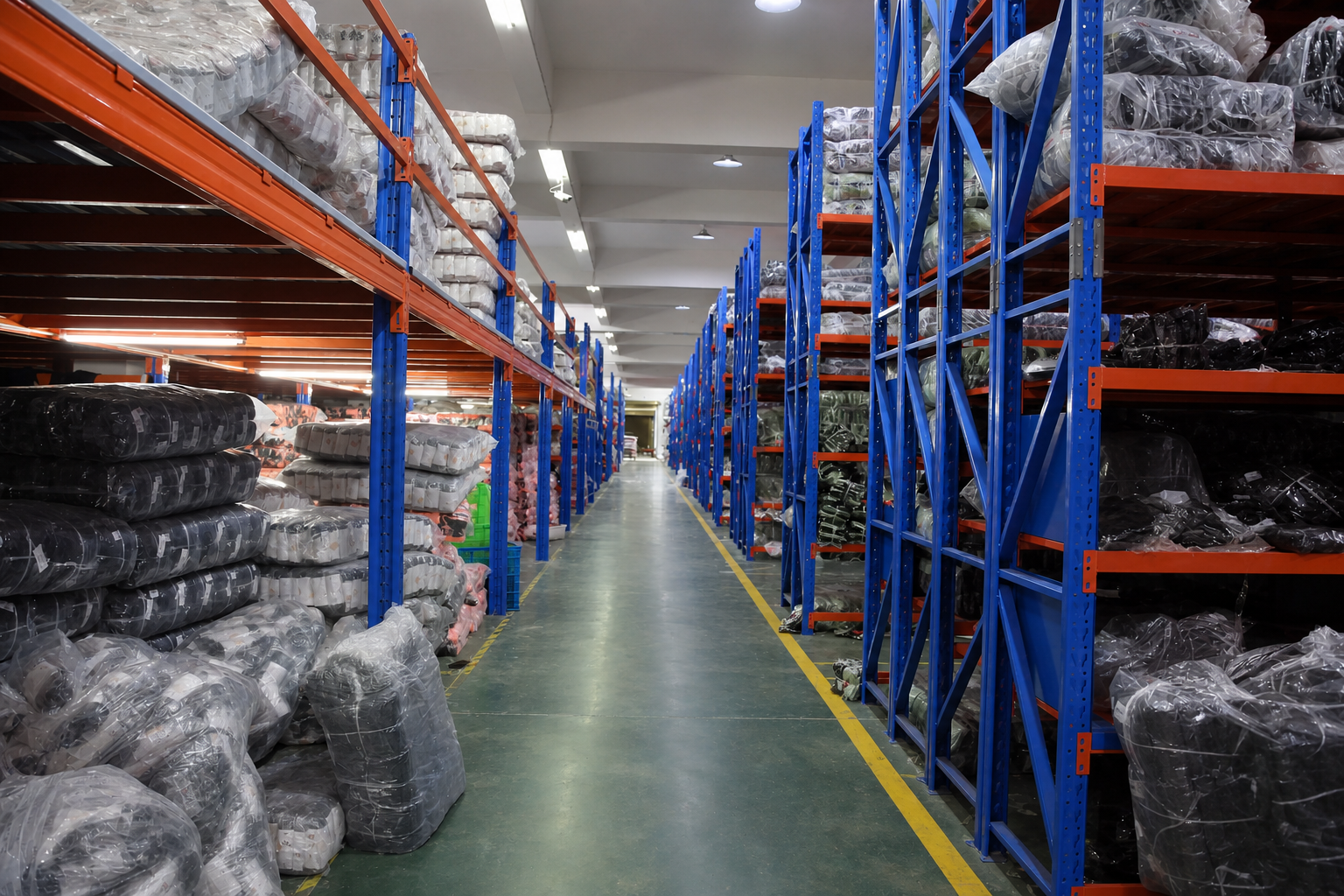
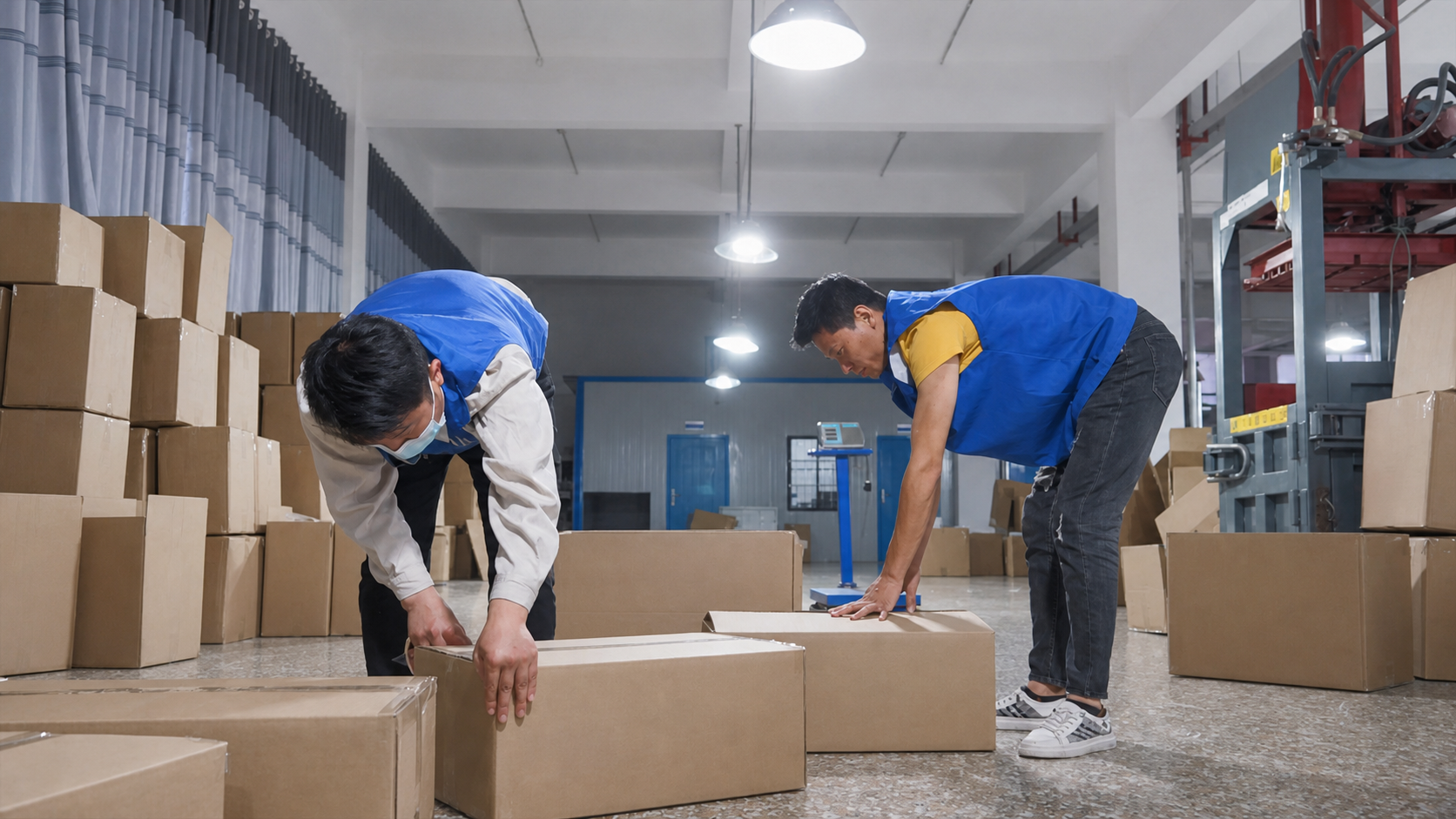
The supporting areas around production
These views show general storage and packing in affiliated facilities, not dedicated bag lines. Order-specific handling and packing arrangements are confirmed with your brief.
Material storage · support facility
Storage and material handling around production.
Carton packing · support facility
Packing format and carton information follow the confirmed order.
Order planning
Production planning references
Early planning figures help buyers decide whether a programme is worth developing, but they are not automatic promises. Bag structure, material availability, decoration, approval speed, packing and order mix can all change the final arrangement.
MOQ per style
100 pcs combined
Sample lead time
Typically 7–10 days
Bulk production
Typically 30–45 days
Monthly capacity
Up to 200,000 pcs
MOQ, lead times and capacity are planning references. Final feasibility, price and schedule depend on the confirmed product, materials, colors, quantities, approvals, packaging and production loading.
Move from evidence to feasibility
Give the factory route a real product brief
Share the bag category, intended use, estimated quantity, target date, destination market and the reference material you already have. Truedrape can use those facts to identify the first construction, material and sampling questions instead of offering a generic factory promise.
Tell us what the bag needs to carry, your order quantity and target timing. Add a reference file if useful so we can discuss materials, construction and sampling.