Bag Quality Control Checklist for Buyers
Turn the approved sample into an inspection checklist: incoming materials, sewing, function, appearance and the details on the carton.

A final inspection is too late to decide what “acceptable” means. If the buyer and factory have not agreed the usable pocket size, logo position or packing method, the inspector has no reliable basis for deciding whether the order matches the request.
Start with the approved sample and current documents. Then identify where a mistake would affect use, appearance or delivery. A few well-defined checks at the right stages are more useful than a generic promise to check everything.
Make the approved sample an inspection reference
Give the sample a reference code and keep the latest measurement sheet, component list and artwork with it. Note any approved exceptions. If a zip was changed after the sample was made, the inspection documents need to identify the final choice.
Write down the measurement method as well as the target. Specify where a handle drop begins and ends, how an adjustable strap is positioned and whether the body is filled during measurement. Agree tolerances appropriate to the construction and the function.
For appearance, use clear examples where words are subjective. The accepted color swatch and decoration sample are more useful than “good color” or “premium print.” If acceptable shade variation or placement is important, settle the reference before production.
Bag quality control starts with incoming components
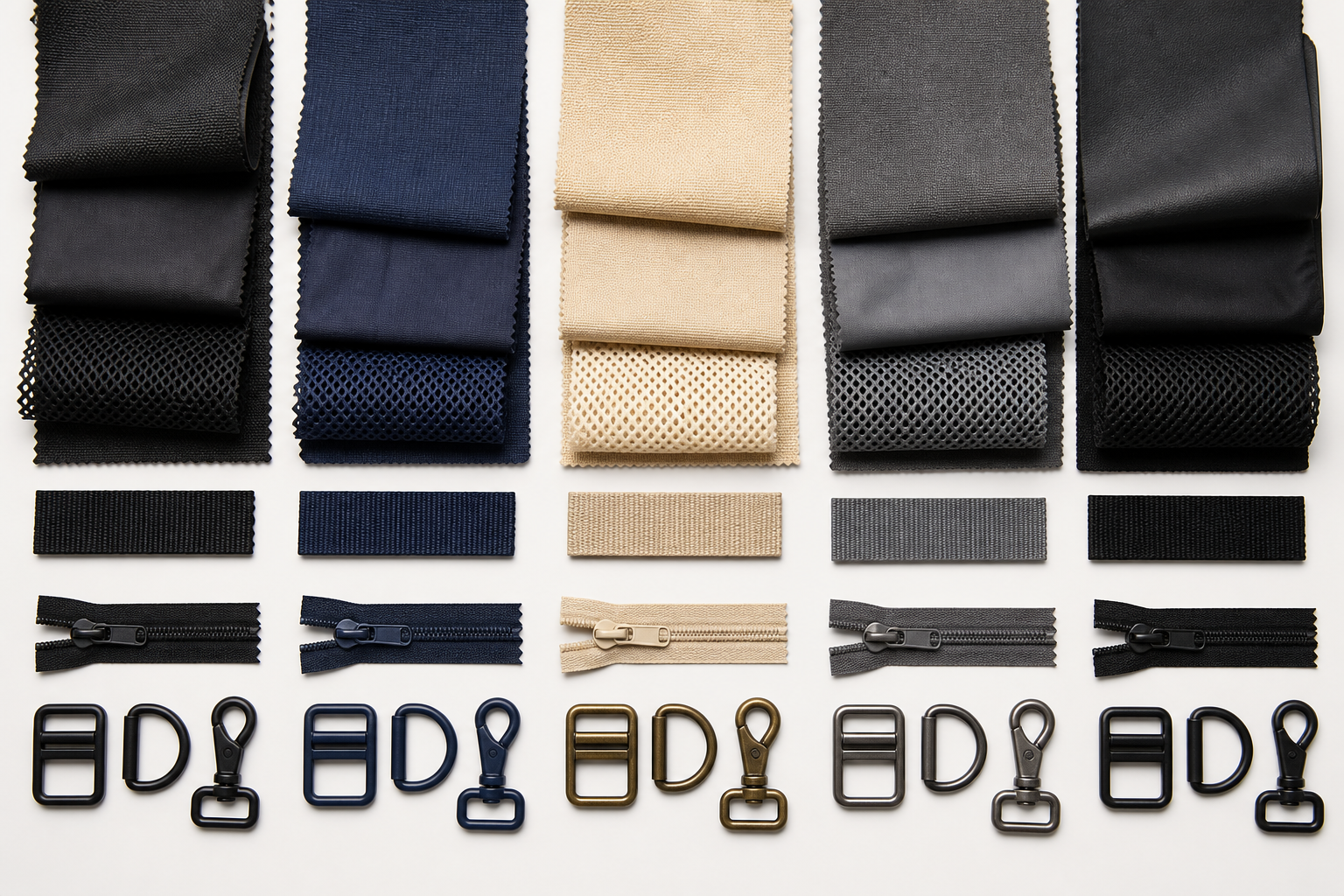
Incoming checks can catch a wrong color, finish or component before the same problem is repeated across an order. Match material references and compare the shell, lining and webbing together.
Inspect the things that will be harder to access after assembly: backing, foam, support layers and reinforcement pieces. Check that the component supplied matches the approved specification, not merely that it resembles the sample in a photograph.
If a material or part changes, ask for a documented approval. An apparently equivalent zipper or lining can change the way the bag opens or feels. The agreed substitution process should apply before use, not become a note discovered at final inspection.
Put checkpoints where mistakes become expensive
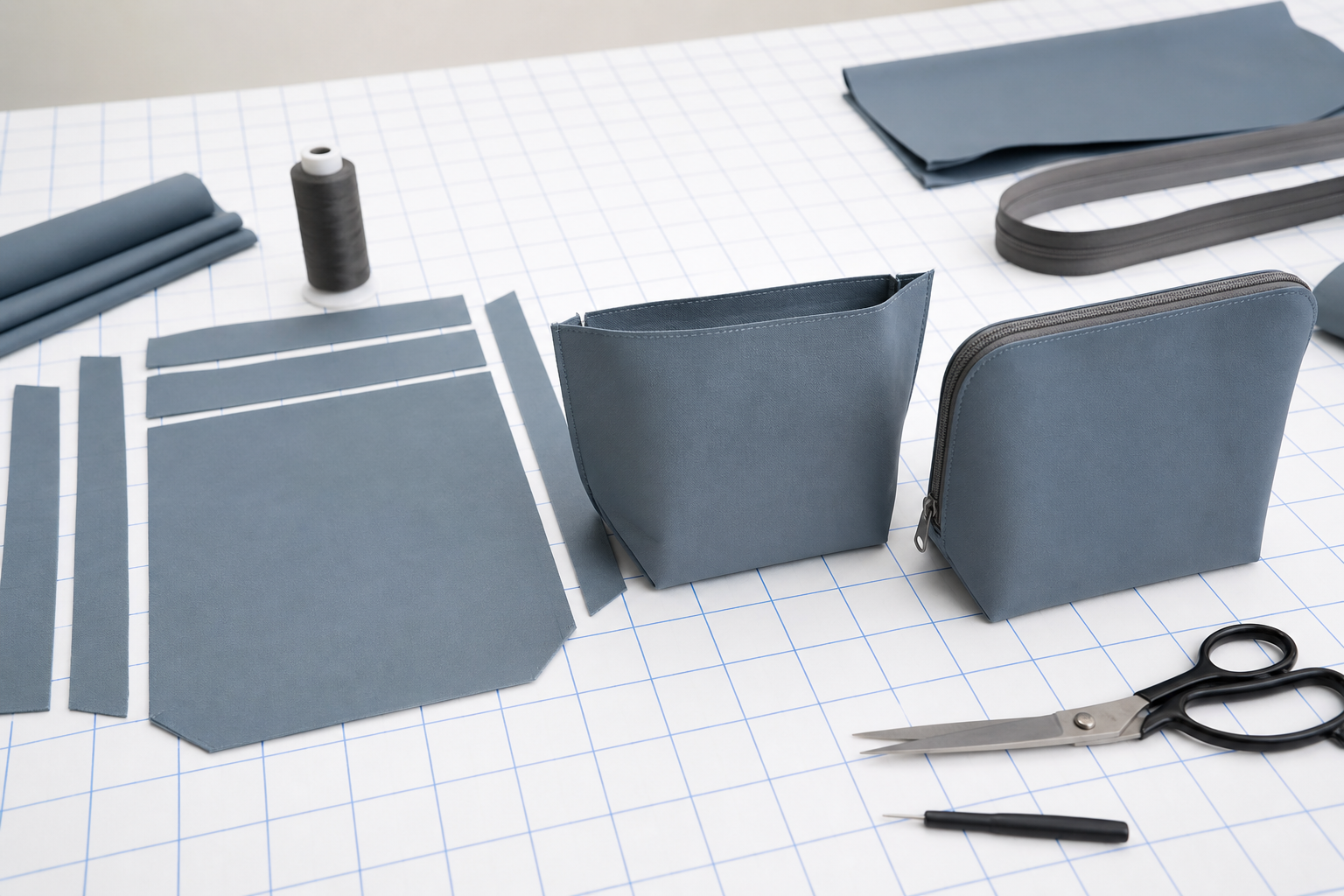
A strap attachment is easier to examine before the lining covers it. A printed panel is easier to reject before it is sewn into a complete bag. Choose in-process checks around those moments.
| Area | Useful checkpoint | Evidence to record |
|---|---|---|
| Decorated panels | Before assembly | Artwork version, placement and application appearance |
| Handles and straps | Before attachment points are concealed | Reinforcement and attachment construction |
| Lining and pockets | Before the interior is closed | Pocket location, opening and seam finish |
| Main closure | During assembly and on finished units | Zip operation and clearance from lining |
| Final presentation | Before packing | Shape, visible marks and match to approved reference |
These are starting points. The factory and buyer should adapt them to the bag. A simple drawstring pouch and a compartmented backpack do not need identical inspection sheets.
Separate function from appearance
Operate the bag rather than looking only at it. Open every type of closure, adjust straps, check pockets and confirm the intended items fit. Inspect the interior under enough light to see seam finishes and loose threads.
For a backpack, examine handle and shoulder-strap attachments and device access. For a cosmetic bag, check the zip path and whether bottles can be inserted without forcing the opening. For a cooler, distinguish an ordinary visual check from an agreed leak or thermal-performance test.
A practical checklist might include:
- Finished measurements at the agreed points.
- Zipper, buckle and adjustment function.
- Pocket access and fit of intended contents.
- Decoration size, position and legibility.
- Seam alignment, binding and visible workmanship.
- Surface marks, damage and mismatched components.
- Product labels and packing instructions.
A hand check is not a substitute for a specified laboratory or performance test. Where test evidence is required, agree the method, samples and timing separately.
Agree how findings affect shipment
The inspection plan should say how units are selected, which criteria are checked and what happens when a finding falls outside acceptance. A sampling inspection does not mean every piece has been individually checked.
If a buyer specifies a statistical inspection plan, agree the lot definition, sample selection and acceptance criteria with the inspection provider. Do not treat a shorthand quality level as permission for a fixed percentage of defective goods, or as a guarantee that the rest of the shipment is defect-free.
Distinguish a minor appearance issue from a failure that affects function or safety. The classification and response need agreement for the project. If goods need rework, identify the affected scope, the correction and the reinspection required. Do not accept only a close-up of one repaired unit as evidence that a recurring problem has been resolved.
Include the packing table in the inspection
The correct bag can still arrive as the wrong order. Check color assortment, unit counts, labels, barcode information, carton marks and destination grouping against the final instructions.
Review whether folding, inserts and protective packing keep the approved appearance. A crease through a printed panel or an unsecured metal fitting can create damage after a bag has passed its visual check. Confirm carton contents rather than relying on the outside label alone.
Ask for a report that identifies the order, lot, sample selection, inspected quantities, findings and supporting photographs. It should make unresolved issues visible. A single “passed” line gives the buyer little information about what was actually examined.
What to send before production starts
Send the approved reference, final specifications, artwork, packing table and your project-specific inspection requirements together. Ask who records checks, who reviews findings and who authorizes the next step.
Keep quality requirements connected to the product, not as an unrelated document sent after manufacture. The sampling guide explains how to record approval. You can also review our production capabilities and factory tour before discussing the checkpoints for your order.