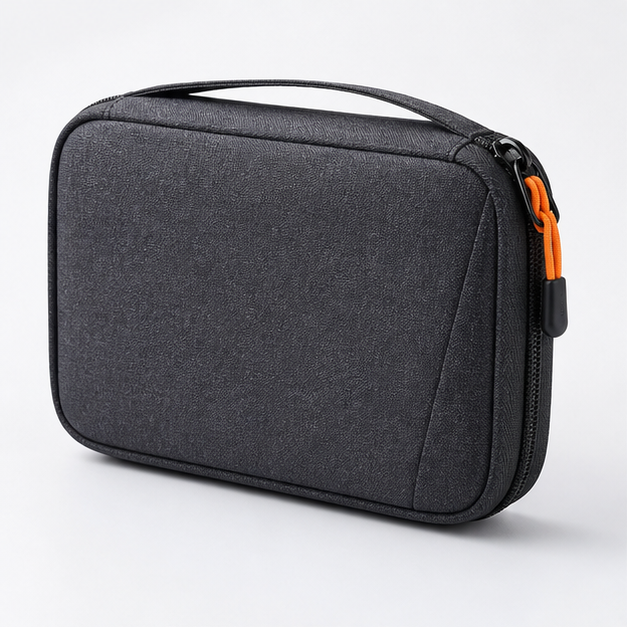
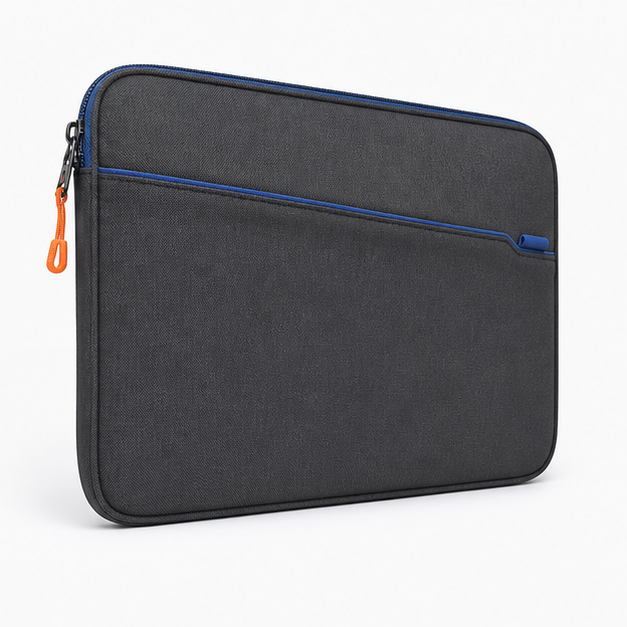
Document Travel Pouch
Travel-brand and corporate document-kit procurement
Reference size26 × 18 × 3 cm
- Internal layout
- RFID option review
OEM sewn fabric pouches and organizers for brand and wholesale procurement. Compare cable, packing, document and equipment layouts, then specify compartments, zipper access and branding.
Discuss your organizer project B2B manufacturing references. Specification and quantities confirmed through sampling.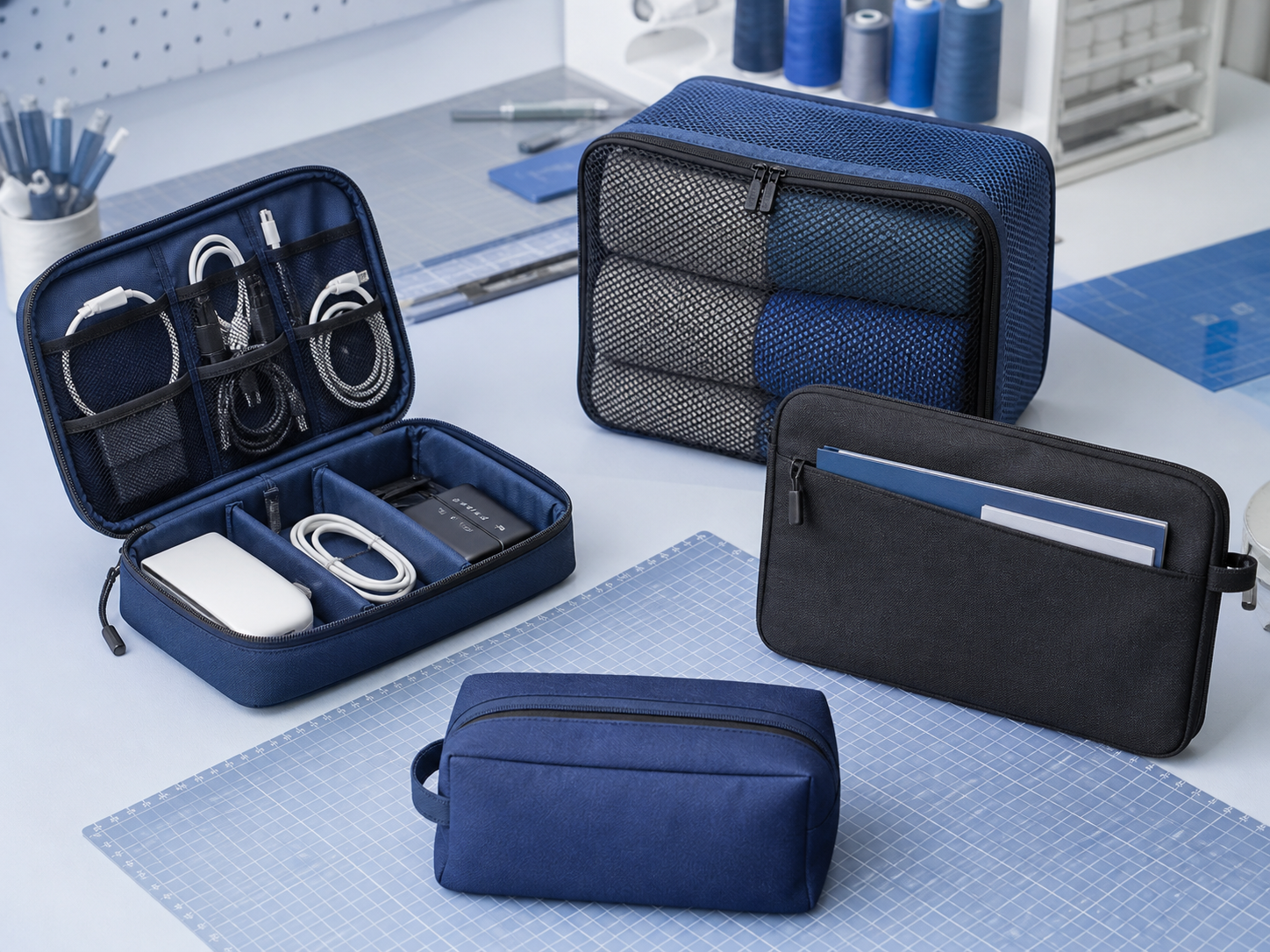
6 development references
Travel-brand and corporate document-kit procurement
Reference size26 × 18 × 3 cm
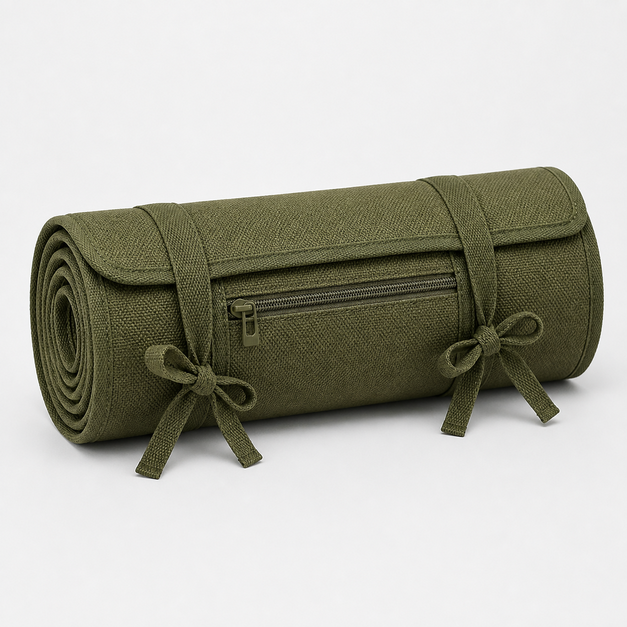
Field-service, maintenance-kit and OEM component organization programs
Reference sizeSpecified to the project brief
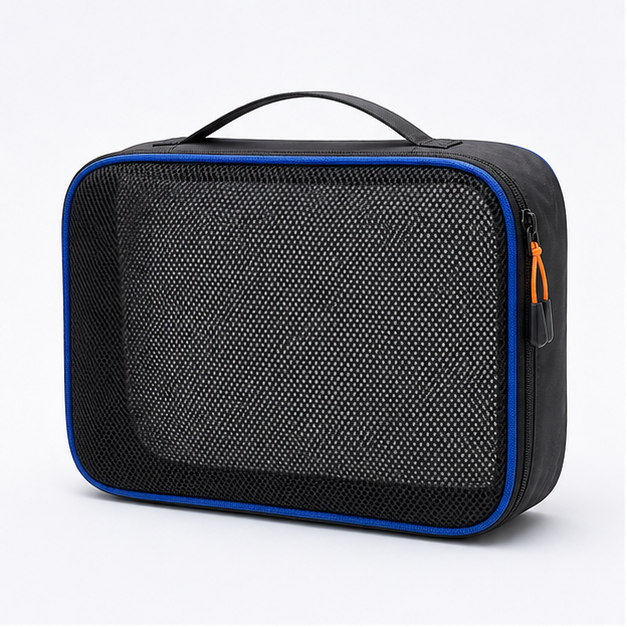
Travel-brand and luggage-organizer OEM programs
Reference size35 × 25 × 10 cm
Wholesale equipment-kit and organizer programs
Reference size24 × 16 × 8 cm
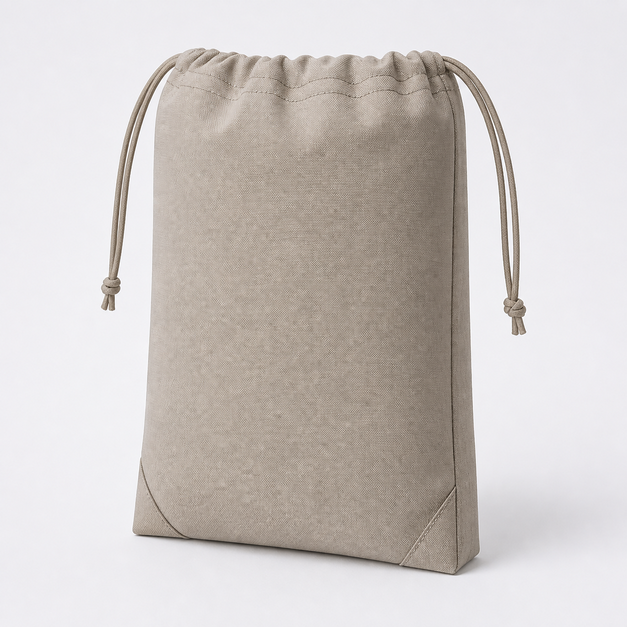
Footwear, travel-accessory and hospitality procurement programs
Reference sizeSpecified to the project brief
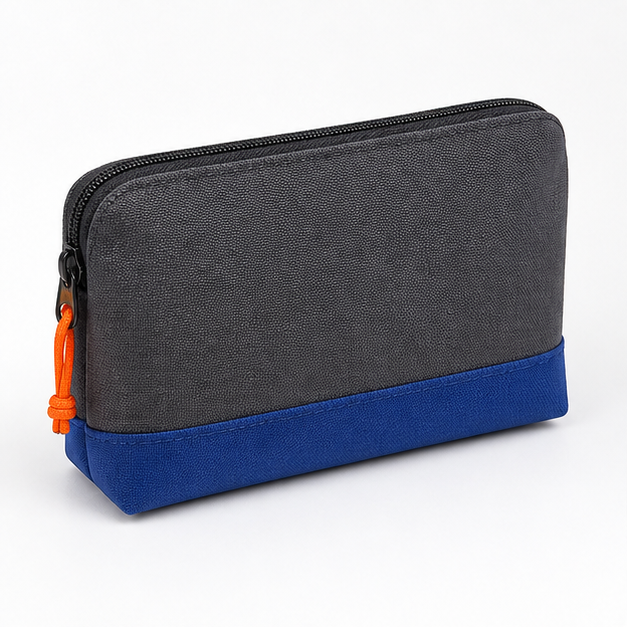
Tech-brand and corporate accessory procurement
Reference size22 × 15 × 6 cm
MATERIALS / POUCHES & ORGANIZERS
Documents, cables and clothing need different organization. Choose the outer textile, interior contact surfaces and retention details from the actual contents.
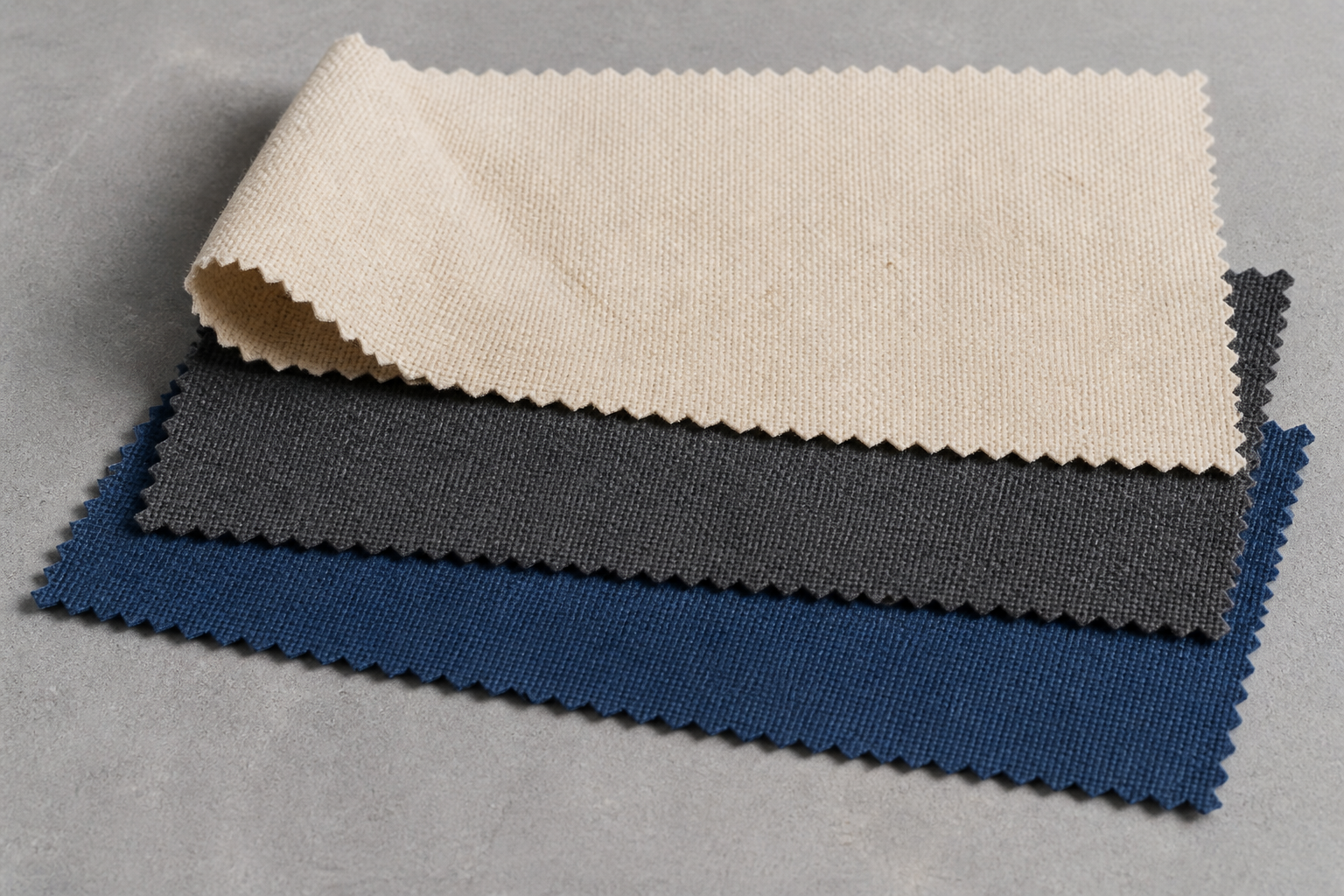
The general zip pouch offers canvas; technical polyester directions suit the document and tech references.
Confirm shell composition, feel and decoration area on the selected pouch format.
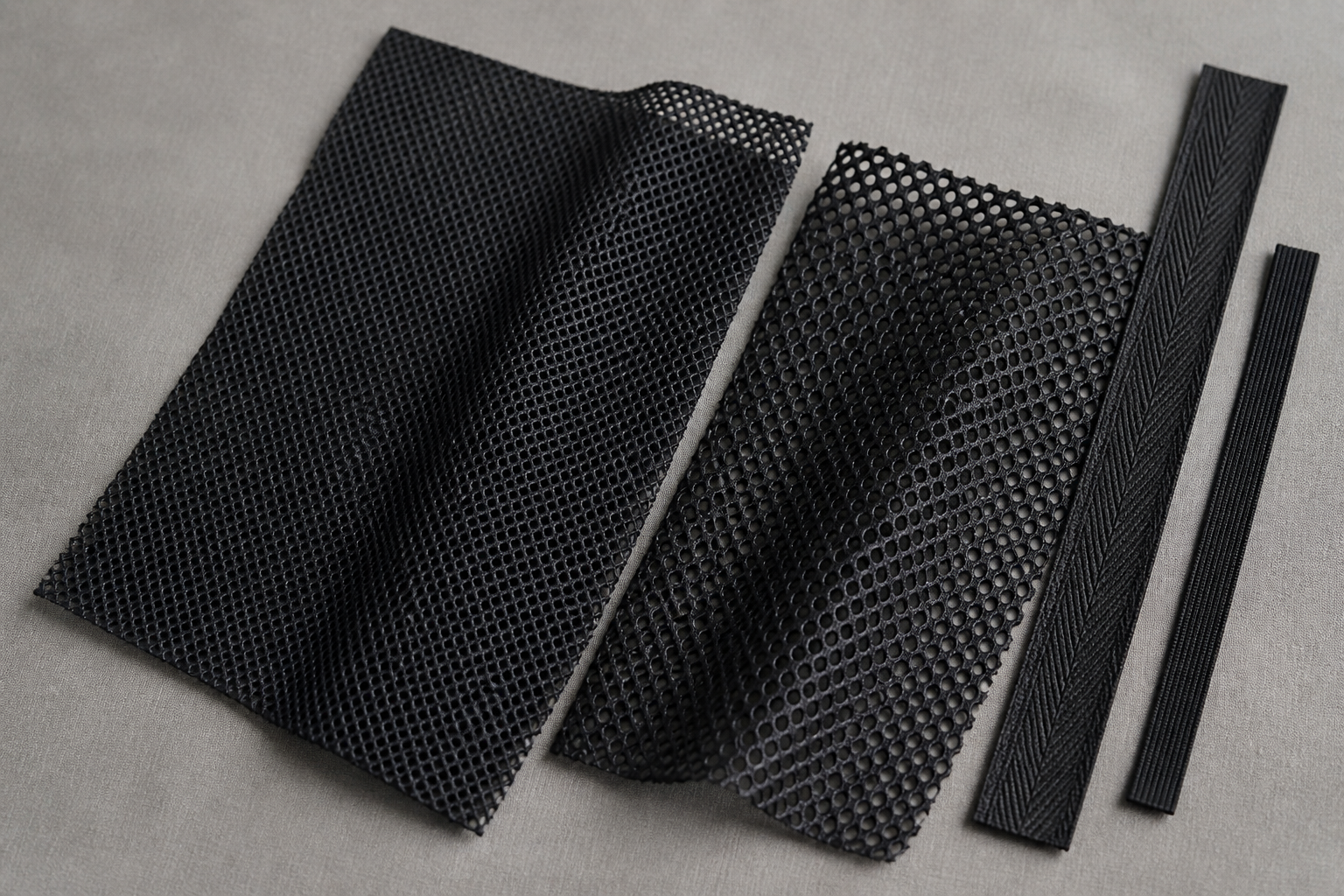
The packing cube starts with a mesh-lid direction. Internal mesh and elastic options can also be reviewed for organized storage.
Define visibility, mesh opening and pocket dimensions with the objects that each section should hold.
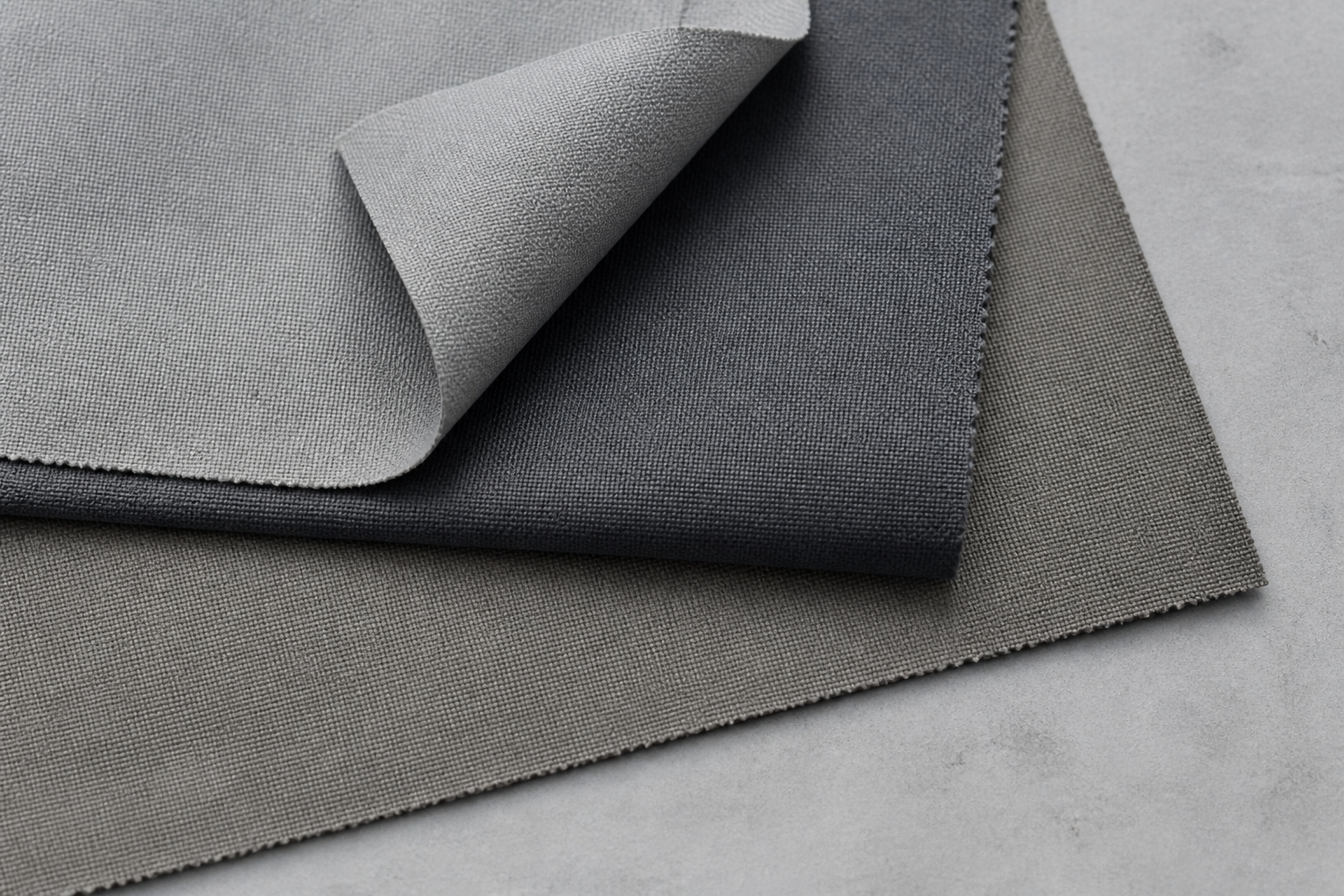
Soft or polyester lining directions vary by model. Added padding is a separate choice, not a guarantee of device protection.
Agree lining contact feel, padding placement and the resulting usable internal dimensions.
Illustrative material studies, not verified swatches or test results. Final composition, construction and any performance claim require approval and supporting evidence.
CONSTRUCTION WORKSHOP
Review these decisions alongside the chosen format. The pictured designs are examples; your final layout is defined through sampling.
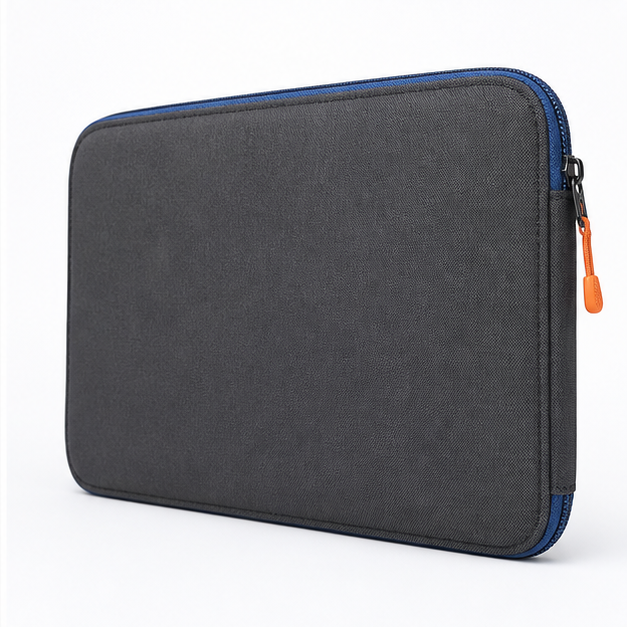
Give the sizes of chargers, cables, cards or documents. Map each item to a loop, sleeve, divider or open space.
Buyer questionWhich items need a fixed position and which need flexible storage?
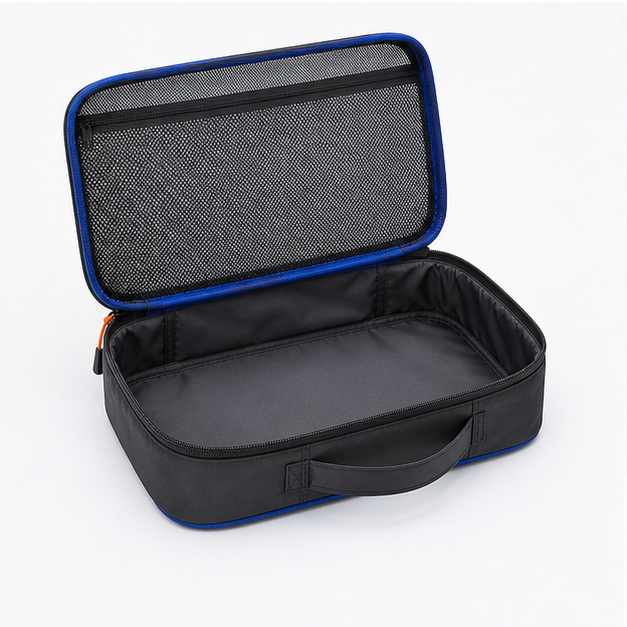
Choose how far the pouch should open and whether the user needs to see all contents at once. Review the loaded zipper path.
Buyer questionCan every section be reached without emptying the organizer?
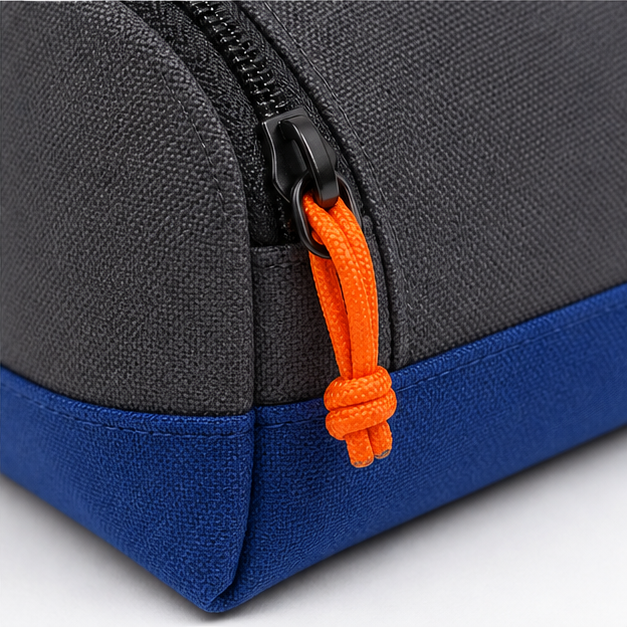
Define whether the order is one size or a coordinated set. Each size, color and artwork version needs a clear identity and packing instruction.
Buyer questionWill units be packed individually or sold together as a set?
A useful organizer starts with an item list. Match each sleeve, loop or divider to the objects it must hold, then test access with the kit packed.
Send dimensions and quantities for devices, chargers, documents or packed clothing. Identify items that must remain immediately accessible.
Review elastic tension, pocket depth, divider height and padding. A packed sample shows whether the organization really works.
Confirm single units or multi-size sets. Any RFID or other technical option must be separately specified and verified; it is not assumed.
CATEGORY DEVELOPMENT
The general manufacturing route is the same; these are the decisions specific to pouches & organizers.
Send the documents, devices, cables or garments to be organized.
A size and retention layout for one format.
Choose the shell, lining, mesh, elastic and zipper opening.
A component list and first-sample specification.
Check item fit, loop tension, pocket access and closed shape.
A marked layout with accepted revisions.
Confirm size variants, artwork, labels and which items pack together.
A version-controlled set matrix and packing list.
Confirm the sample before bulk production. Quantities, colors and timing are agreed for your actual specification.