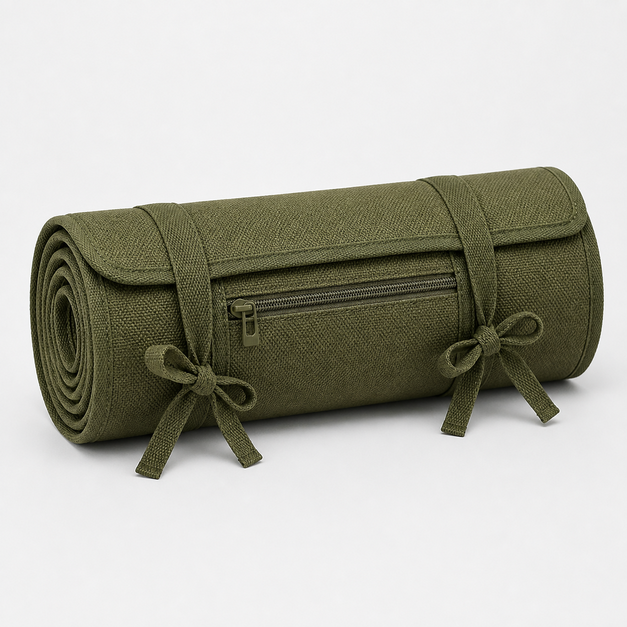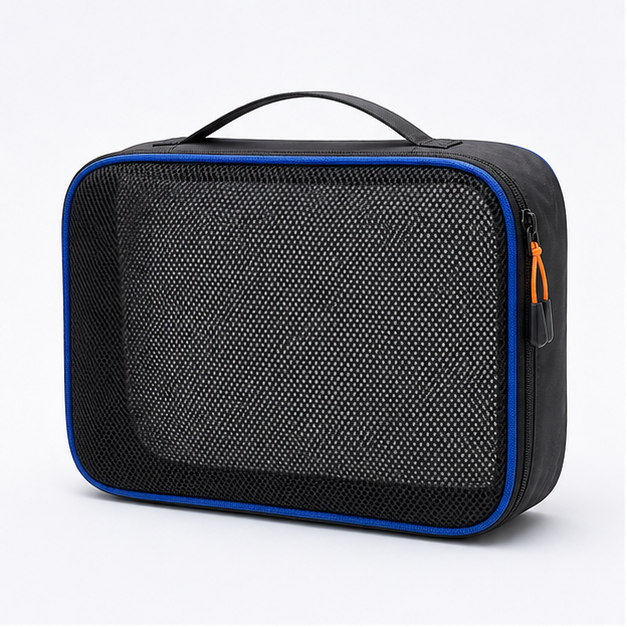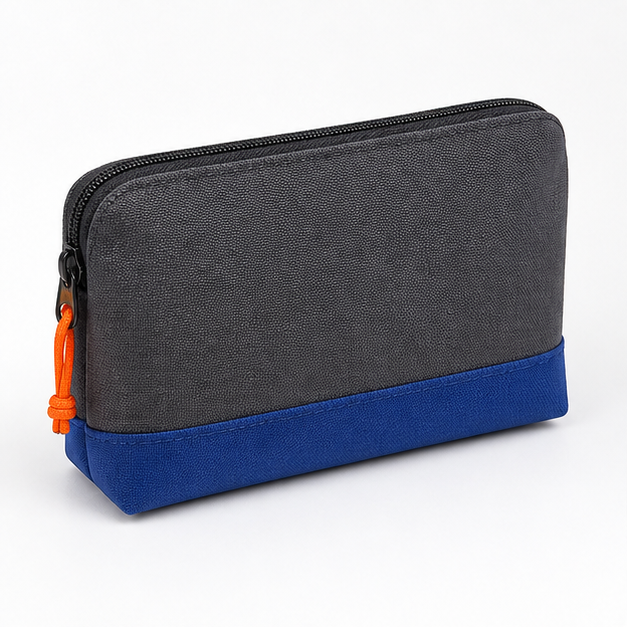
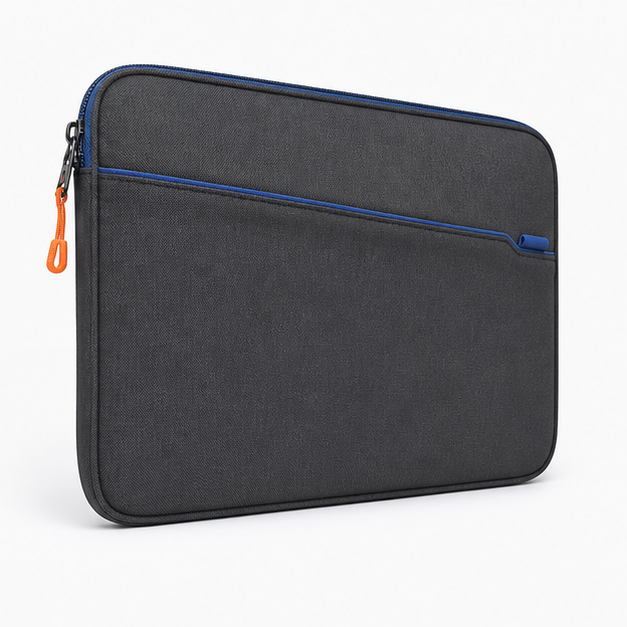
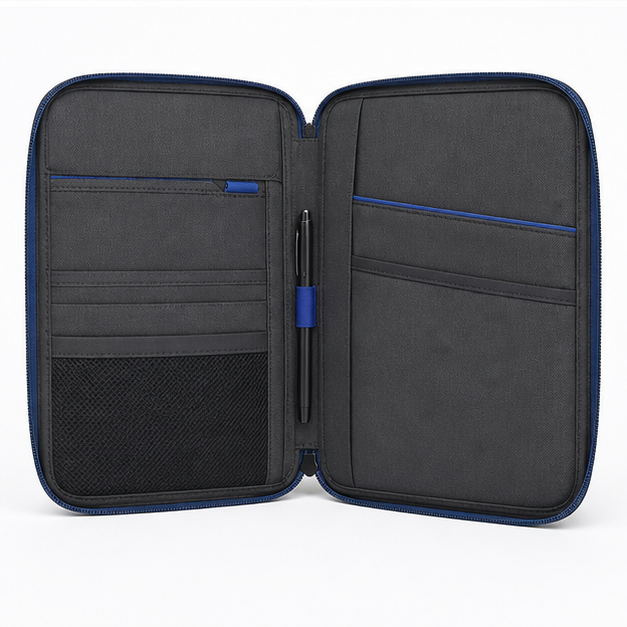
Internal organization
Document sleeves, card storage and a pen position form the organizing brief. Identify the most frequently retrieved documents before deciding the internal sequence.
- Document sleeves
- Card slots
- Pen loop
Document Travel Pouch · Travel-brand and corporate document-kit procurement
Design reference for customization; final details subject to sampling.
Made-to-order B2B production. Specifications are confirmed through sampling.
An OEM travel document pouch for passports, cards and itineraries. Use the intended document sizes to set sleeve depth and card access, then check the pen loop and closure without bending the contents.
Use the interior and detail views to discuss your changes.
Document sleeves, card storage and a pen position form the organizing brief. Identify the most frequently retrieved documents before deciding the internal sequence.
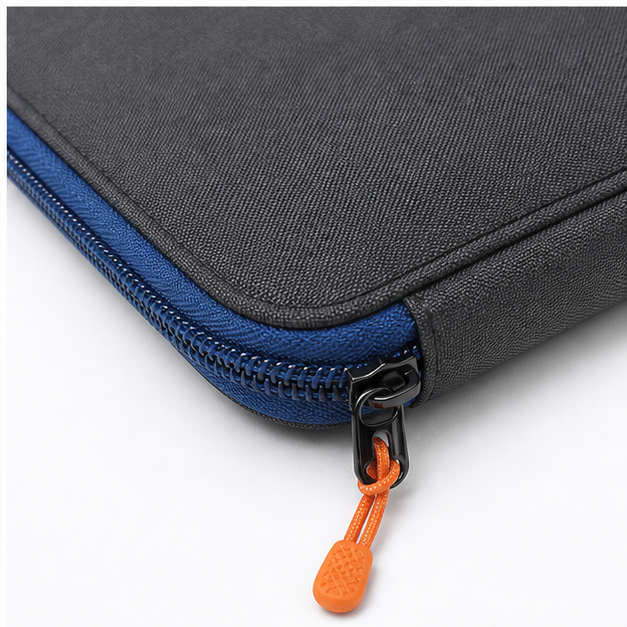
Review fabric, lining, zipper and retention materials around the objects being organized. Any special protective or technical requirement needs a separate specification.
Reference visuals, not production approval. Features, construction and any performance requirement must be confirmed on your sample.
MATERIAL BUILD
The listed materials are the starting direction for Document Travel Pouch. Review the shell, inside finish and support together before approving the production specification.
Reference directionTechnical polyester
Technical polyester is the reference shell. Agree stiffness and finish around the zipper curve so the document organizer opens as intended.
Reference directionPolyester lining
The polyester lining should be reviewed at document sleeves and card pockets. A contrast color can be specified to distinguish storage zones.
Reference directionTo be defined with your sample
Define pocket support and folding thickness around the full document set. Any RFID option requires a separate material specification and verification.
The close-up belongs to this design reference. It does not verify fiber composition, coating, recycled content or performance.
Tell us what should stay, what should change and which details matter most to your program. Options below are discussion points, not a fixed configuration.
FUNCTIONAL DETAILS
Use these checks to turn the Document Travel Pouch reference into a clear development brief.
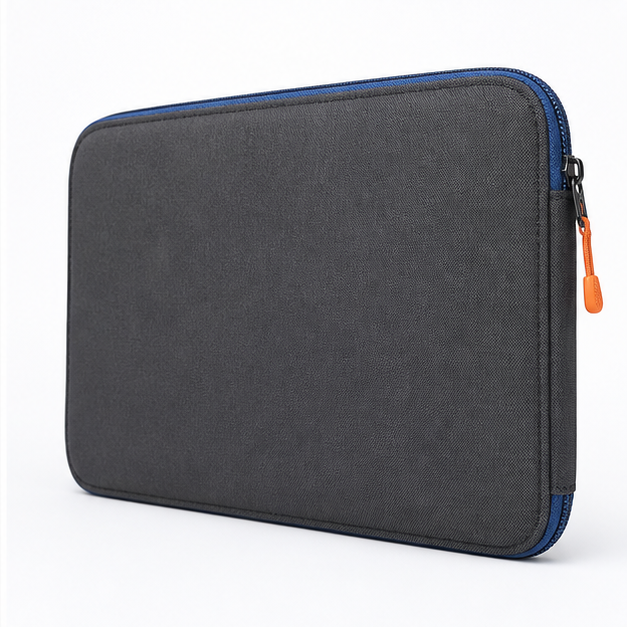
Use the largest document format with its cover or wallet. Sleeve access matters as much as its nominal internal size.
Buyer questionWhich document formats must fit unfolded?
Confirm card count and pen diameter before finalizing pocket pitch and loop size. Check that filled pockets do not collide across the fold.
Buyer questionWhat should be accessible at a checkpoint?
RFID protection is not established by a lining color or product image. If required, agree the material and test scope before adding a label or claim.
Buyer questionIs a verified RFID function part of the brief?
Discuss changes before the pattern is finalized. The pictured configuration is not the final specification for your order.
YOUR DEVELOPMENT PROCESS
A practical sequence for developing Document Travel Pouch, with a clear input and review point at each stage.
SamplingTypically 7–10 days
Bulk productionTypically 30–45 days after approvals
Timing is a planning reference, subject to the agreed specification, material availability, revisions and production schedule.
Fit the actual document sizes with cards and a pen, then check closure clearance and retrieval.
RFID is only an option for separate review; no shielding performance is implied by the base design.
Check artwork size, position, color, label wording and packing. Sign off the final specification and sample together before bulk production.
Field-service, maintenance-kit and OEM component organization programs
Reference sizeSpecified to the project brief
View designTravel-brand and luggage-organizer OEM programs
Reference size35 × 25 × 10 cm
View designWholesale equipment-kit and organizer programs
Reference size24 × 16 × 8 cm
View design