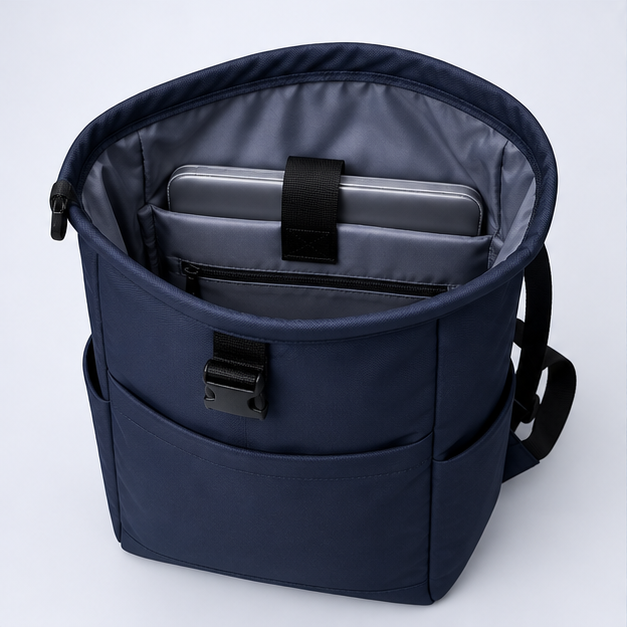
Internal organization
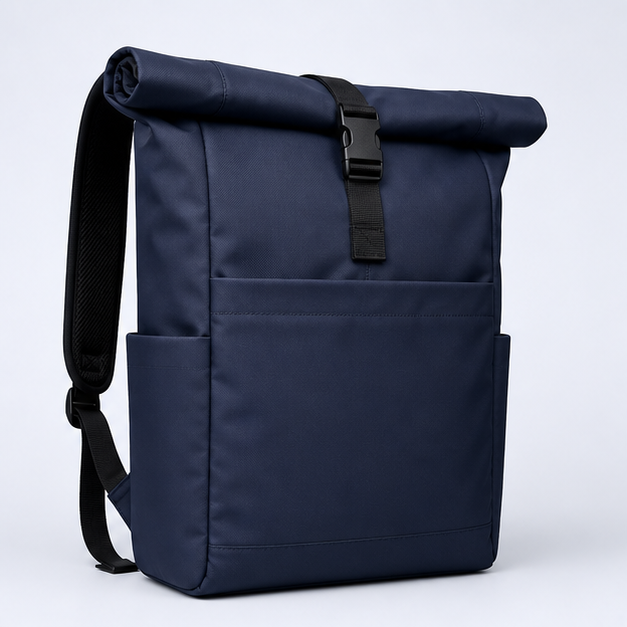
A roll-top changes how the main compartment opens and closes. Discuss the inside layout alongside the intended rolled closure rather than treating capacity as a fixed shape.
- Roll-top closure
- Side access zipper
- Padded back panel
Flex Roll-Top Backpack · Urban-commuter backpack OEM programs
Design reference for customization; final details subject to sampling.
Made-to-order B2B production. Specifications are confirmed through sampling.
An OEM roll-top backpack reference for brands sourcing urban-commuter backpacks. Define the usable capacity with the top rolled closed, then check the side zipper and padded back against the intended load.
Use the interior and detail views to discuss your changes.
A roll-top changes how the main compartment opens and closes. Discuss the inside layout alongside the intended rolled closure rather than treating capacity as a fixed shape.
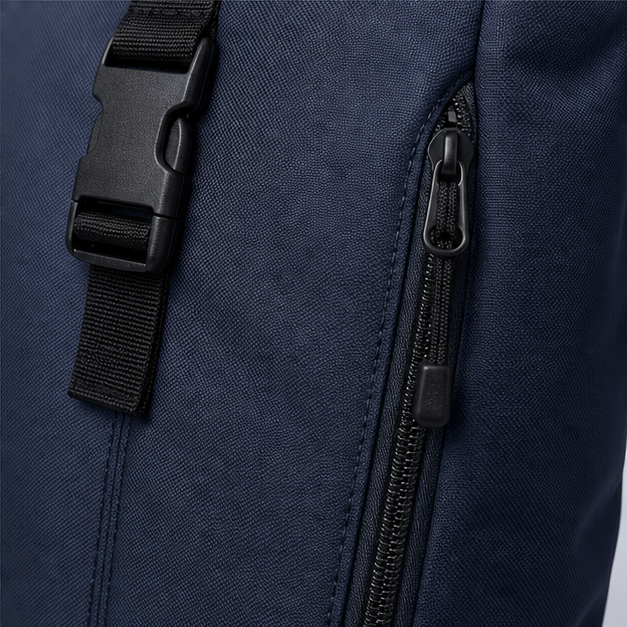
Discuss shell texture, lining feel, padding and zipper finish together. The close-up is a visual reference; exact material weight and construction are agreed in the specification.
Reference visuals, not production approval. Features, construction and any performance requirement must be confirmed on your sample.
MATERIAL BUILD
The listed materials are the starting direction for Flex Roll-Top Backpack. Review the shell, inside finish and support together before approving the production specification.
Reference directionCoated polyester
The coated polyester reference provides a surface direction only. Agree coating, flexibility and finish; the image does not establish waterproof performance.
Reference direction210D lining
The 210D lining needs to follow the roll-top opening without bunching. Review the transition between the flexible top and the body.
Reference directionTo be defined with your sample
Set roll height, closure webbing and back padding as one carry system. A thicker top can affect how many folds are practical.
The close-up belongs to this design reference. It does not verify fiber composition, coating, recycled content or performance.
Tell us what should stay, what should change and which details matter most to your program. Options below are discussion points, not a fixed configuration.
FUNCTIONAL DETAILS
Use these checks to turn the Flex Roll-Top Backpack reference into a clear development brief.
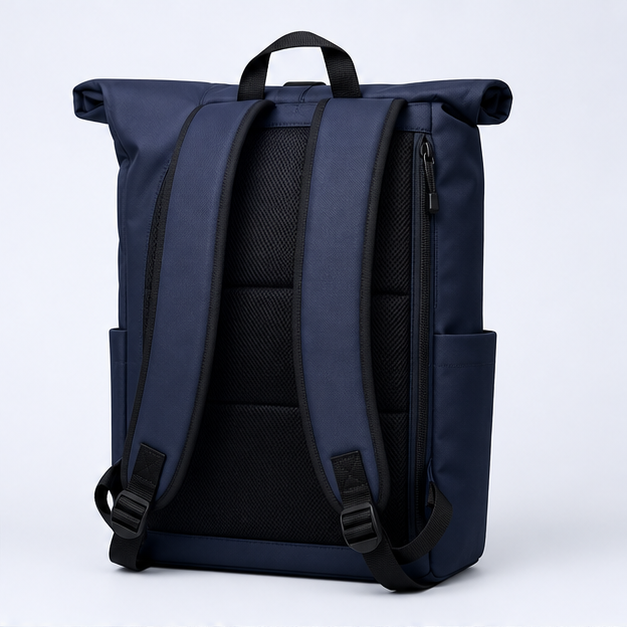
The extended height is not the same as usable closed capacity. Decide the required fold allowance and how the closure is secured.
Buyer questionWhat must fit with the top properly closed?
Side access needs to line up with the intended compartment. Confirm its opening length and whether a device can be removed while the top stays closed.
Buyer questionWhich item should side access reach?
A coated shell does not settle how seams and zippers behave. Put any moisture-related requirement in the brief for a separate construction and test discussion.
Buyer questionIs there a defined exposure or test requirement?
Discuss changes before the pattern is finalized. The pictured configuration is not the final specification for your order.
YOUR DEVELOPMENT PROCESS
A practical sequence for developing Flex Roll-Top Backpack, with a clear input and review point at each stage.
SamplingTypically 7–10 days
Bulk productionTypically 30–45 days after approvals
Timing is a planning reference, subject to the agreed specification, material availability, revisions and production schedule.
Pack the proposed contents and close the roll top; check how much usable space remains in the agreed closure position.
Review side-access placement, closure security and back padding with the bag loaded. A coated shell is not a waterproof-bag claim.
Check artwork size, position, color, label wording and packing. Sign off the final specification and sample together before bulk production.
OEM multiway work-bag programs for brands and procurement teams
Reference sizeSpecified to the project brief and confirmed during sampling
View designSchool-supply brands and education procurement
Reference size45 × 31 × 16 cm
View designOEM laptop bag ranges for work-bag brands
Reference size44 × 30 × 14 cm
View design