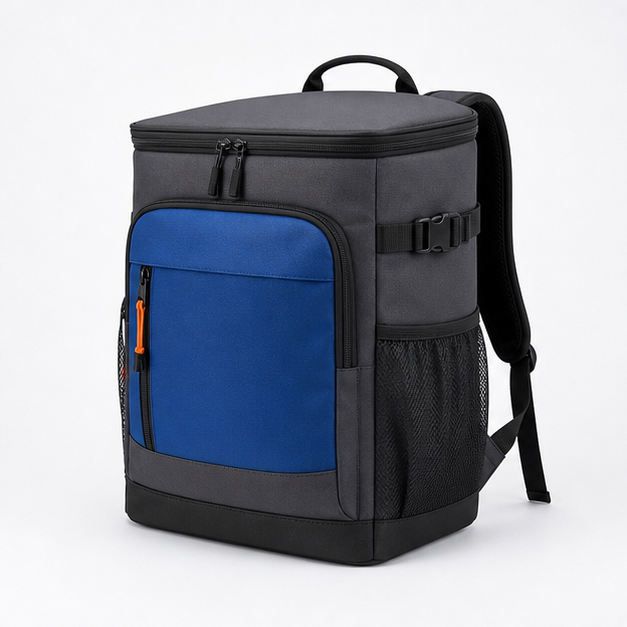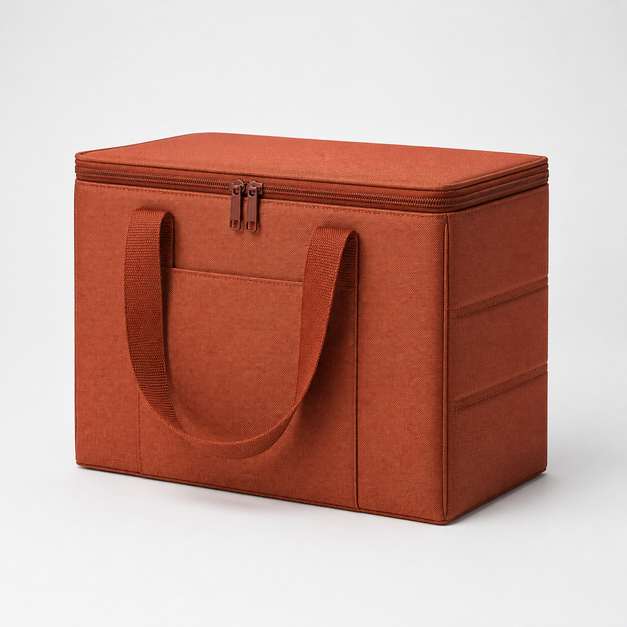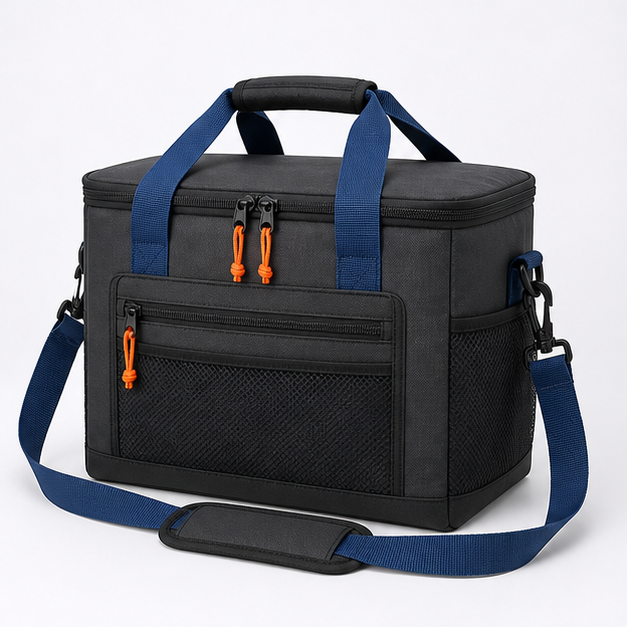
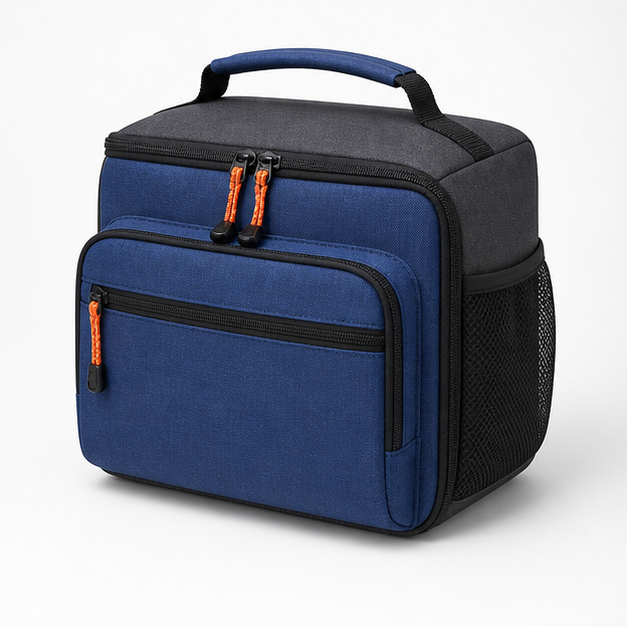
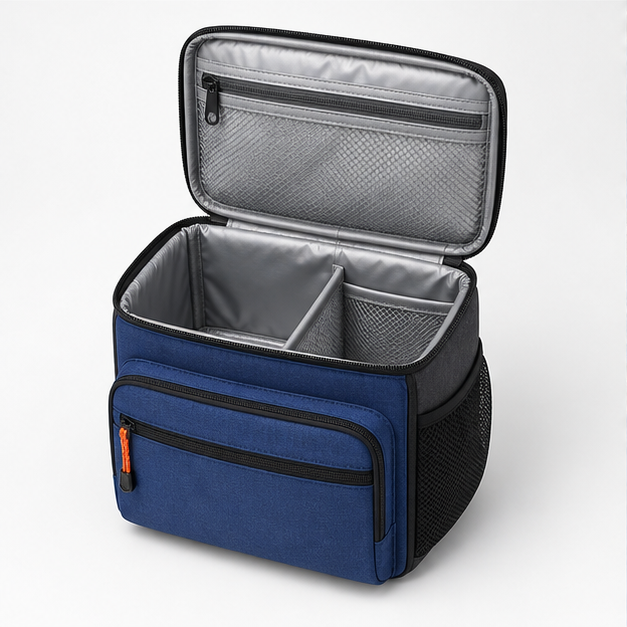
Internal organization
The internal layout should follow the meal containers rather than a nominal capacity. Review whether a divider helps separate the kit or takes up needed space.
- Structured body
- Internal divider
- Side mesh pocket
Structured Lunch Box · School-supply and corporate lunch-bag procurement
Design reference for customization; final details subject to sampling.
Made-to-order B2B production. Specifications are confirmed through sampling.
An OEM structured textile lunch bag for school-supply and corporate procurement programs—not a rigid plastic food container. Use the intended containers to check the divider, opening and lining; agree insulation testing separately.
Use the interior and detail views to discuss your changes.
The internal layout should follow the meal containers rather than a nominal capacity. Review whether a divider helps separate the kit or takes up needed space.
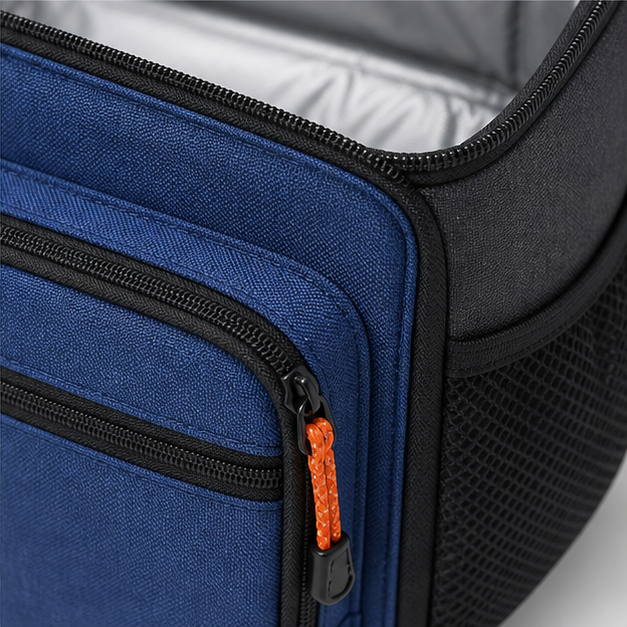
Consider the outer shell, insulation and lining as separate specification decisions. The detail image illustrates construction direction, not a verified thermal or leakage rating.
Reference visuals, not production approval. Features, construction and any performance requirement must be confirmed on your sample.
MATERIAL BUILD
The listed materials are the starting direction for Structured Lunch Box. Review the shell, inside finish and support together before approving the production specification.
Reference direction600D polyester
The 600D polyester direction is the starting point for surface and color. Review it around structured corners and the opening seam.
Reference directionInsulated lining
The insulated lining needs an agreed stack and internal finish. Do not infer cooling duration or leak resistance from its appearance.
Reference directionTo be defined with your sample
Specify how firm the body should be and how the divider meets the base. Layer thickness affects container clearance and closing space.
The close-up belongs to this design reference. It does not verify fiber composition, coating, recycled content or performance.
Tell us what should stay, what should change and which details matter most to your program. Options below are discussion points, not a fixed configuration.
FUNCTIONAL DETAILS
Use these checks to turn the Structured Lunch Box reference into a clear development brief.
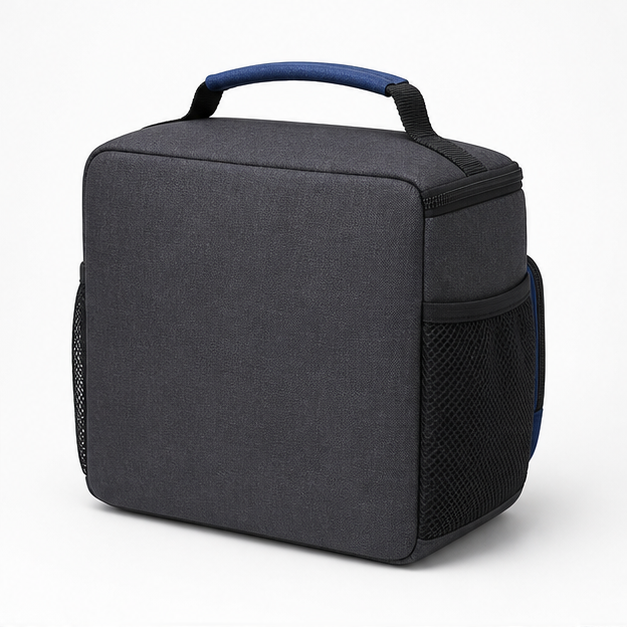
Choose the divider position around the actual containers. Confirm whether the divider is fixed or removable in the approved version.
Buyer questionWhich contents must be separated?
Lid thickness and filled pockets reduce available height. Review the closed sample with every intended item inside.
Buyer questionWhat is the tallest container including its lid?
Match the pocket opening and depth to the bottle or accessory. Review retention with the lunch box lifted by its handle.
Buyer questionWhich bottle diameter should the mesh accept?
Discuss changes before the pattern is finalized. The pictured configuration is not the final specification for your order.
YOUR DEVELOPMENT PROCESS
A practical sequence for developing Structured Lunch Box, with a clear input and review point at each stage.
SamplingTypically 7–10 days
Bulk productionTypically 30–45 days after approvals
Timing is a planning reference, subject to the agreed specification, material availability, revisions and production schedule.
Fit the actual lunch containers and cooling packs, then check lid clearance and carry position.
Agree insulation, lining and cleaning requirements. Temperature duration and leakage must not be inferred from the illustration.
Check artwork size, position, color, label wording and packing. Sign off the final specification and sample together before bulk production.
Outdoor-brand and delivery-equipment OEM programs
Reference size42 × 30 × 20 cm
View designGrocery, event and branded insulated-tote procurement programs
Reference sizeSpecified to the project brief
View designOutdoor-brand and corporate-event procurement
Reference size34 × 28 × 25 cm
View design