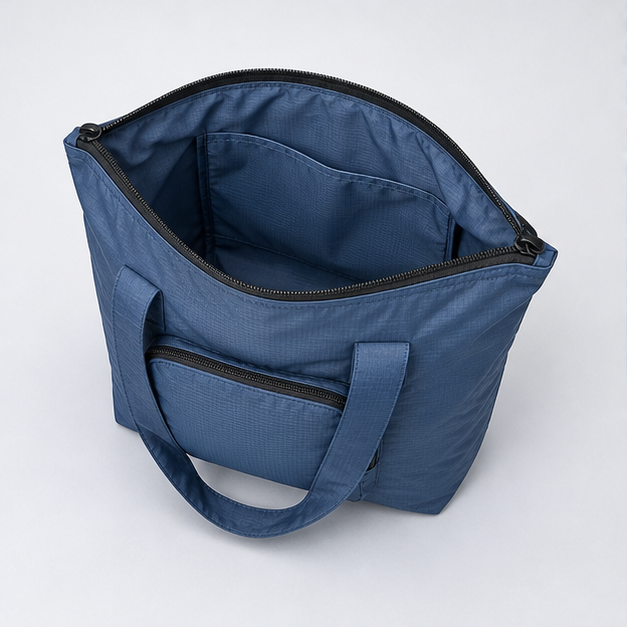
Internal organization
The storage pocket is part of the folding design as well as the bag layout. Any internal additions should be reviewed against the intended compact packed format.
- Self-pack pocket
- Long handles
- Compact storage
Foldable Carry Tote · Travel-brand and corporate promotional procurement
Design reference for customization; final details subject to sampling.
Made-to-order B2B production. Specifications are confirmed through sampling.
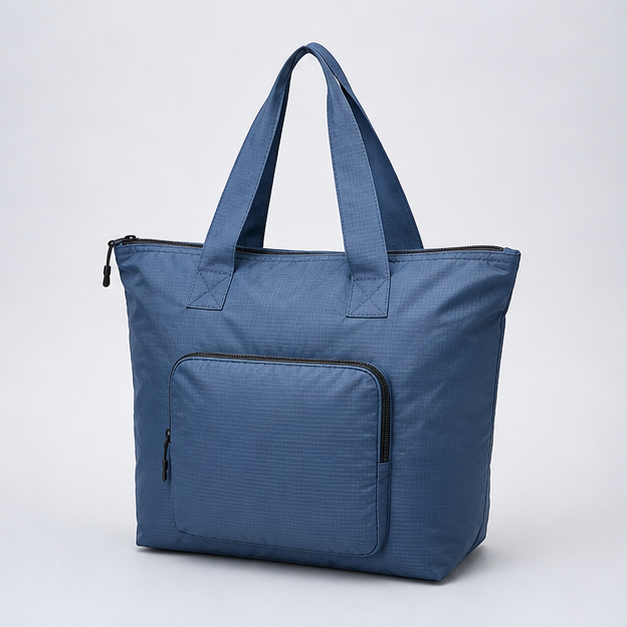
An OEM foldable tote bag for travel-brand and corporate promotional projects. Decide the open capacity and packed size together, then check folding, handle comfort and the self-pack pocket with a physical sample.
Use the interior and detail views to discuss your changes.
The storage pocket is part of the folding design as well as the bag layout. Any internal additions should be reviewed against the intended compact packed format.
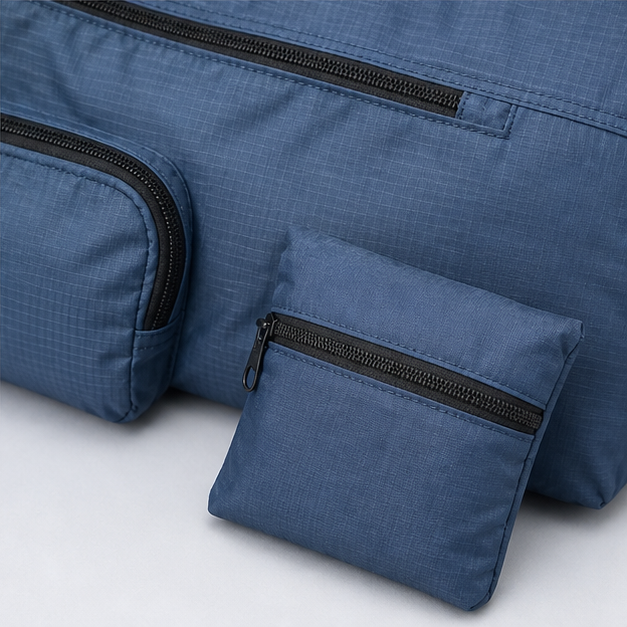
Review body fabric, handle material and finishing as one combination. Fabric weight and reinforcement affect both the shape and the way the tote folds.
Reference visuals, not production approval. Features, construction and any performance requirement must be confirmed on your sample.
MATERIAL BUILD
The listed materials are the starting direction for Foldable Carry Tote. Review the shell, inside finish and support together before approving the production specification.
Reference directionLightweight ripstop
The lightweight ripstop direction must be flexible enough for the chosen folding sequence. Review weight, grid appearance and color on a physical swatch.
Reference directionUnlined construction
The reference is unlined. Adding a lining would change thickness, folded size and seam finishing, so treat it as a separate construction decision.
Reference directionTo be defined with your sample
Keep self-packing space, seams and handles coordinated. A smaller packed target can require a simpler handle or pocket construction.
The close-up belongs to this design reference. It does not verify fiber composition, coating, recycled content or performance.
Tell us what should stay, what should change and which details matter most to your program. Options below are discussion points, not a fixed configuration.
FUNCTIONAL DETAILS
Use these checks to turn the Foldable Carry Tote reference into a clear development brief.
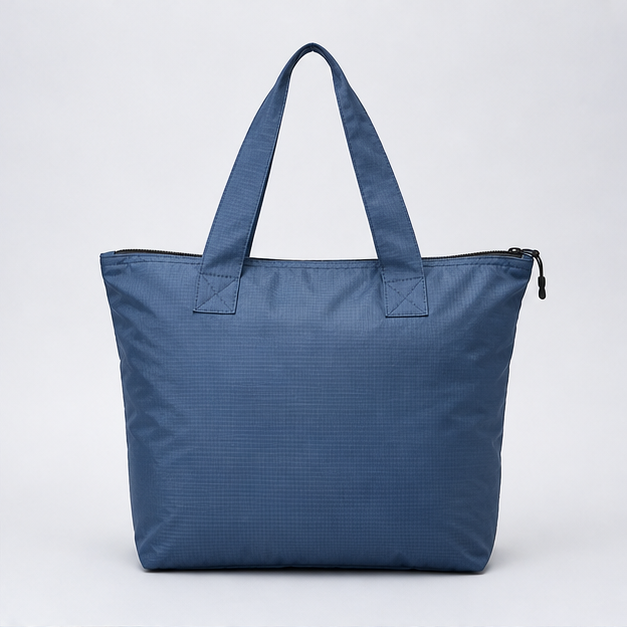
Agree whether the tote folds into an attached pouch or a pocket in the body. Its opening must allow the whole tote to be stored without forcing it.
Buyer questionWhere should the folded bag be kept?
Handle drop needs to work in use without making self-packing awkward. Review the loaded shoulder position and the packed handle bulk.
Buyer questionIs shoulder carry the main use?
Choose artwork placement with the folding map visible. Large or heavy decoration can change the soft hand of the ripstop surface.
Buyer questionWhich face should show when the tote is folded?
Discuss changes before the pattern is finalized. The pictured configuration is not the final specification for your order.
YOUR DEVELOPMENT PROCESS
A practical sequence for developing Foldable Carry Tote, with a clear input and review point at each stage.
SamplingTypically 7–10 days
Bulk productionTypically 30–45 days after approvals
Timing is a planning reference, subject to the agreed specification, material availability, revisions and production schedule.
Unfold, load and repack the sample several times to check the folding sequence and pocket fit.
Agree the weight, handle length and print position so decoration does not interfere with folding.
Check artwork size, position, color, label wording and packing. Sign off the final specification and sample together before bulk production.
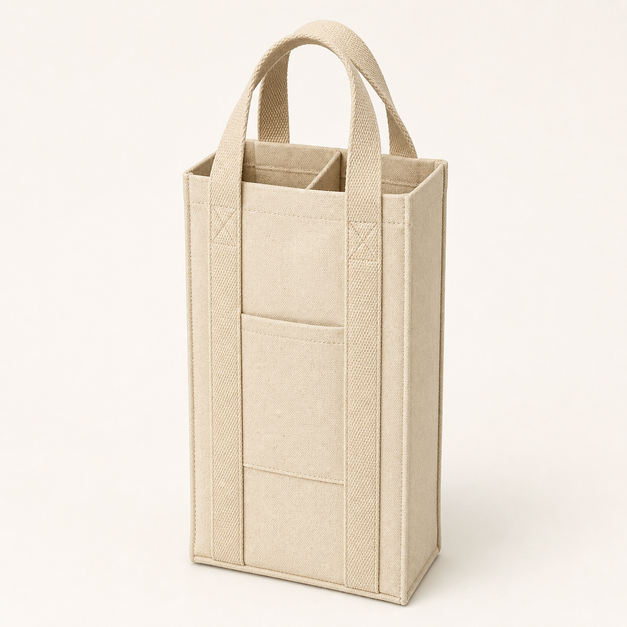
Beverage brands, presentation programs and divided-carrier procurement
Reference sizeSpecified to the project brief
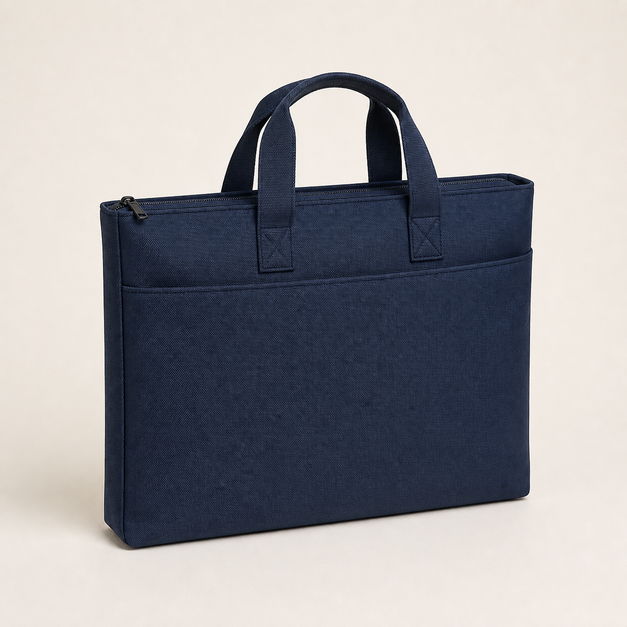
View designConference organizers, event agencies and delegate-kit procurement
Reference sizeSpecified to the project brief
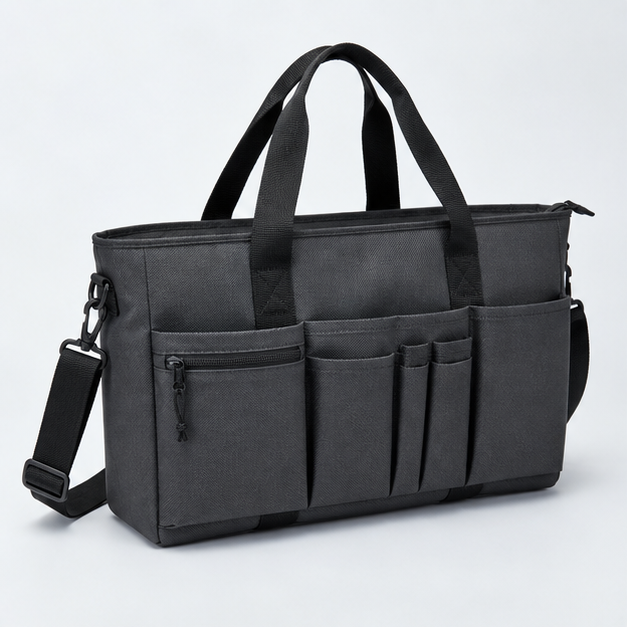
View designWorkwear brands and equipment-organizer procurement
Reference size38 × 30 × 16 cm
View design