Made-to-order B2B production. Specifications are confirmed through sampling.
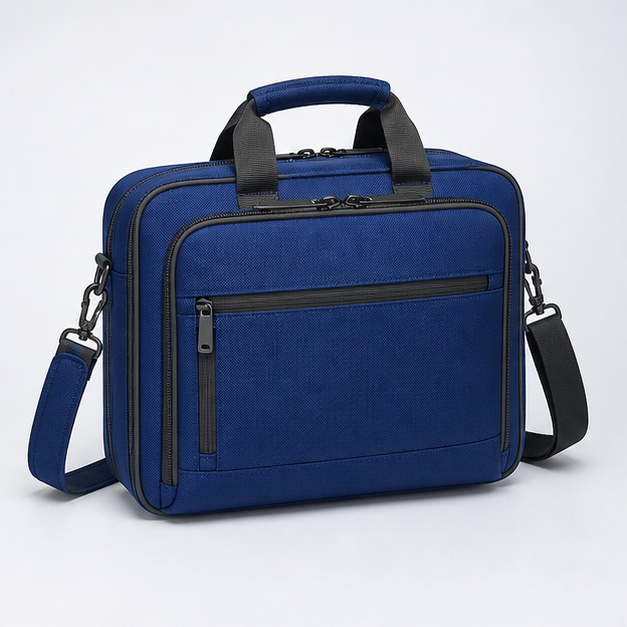
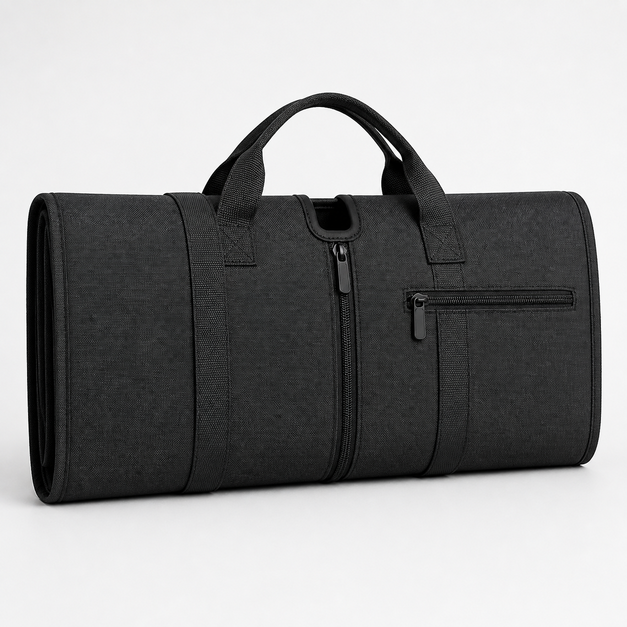
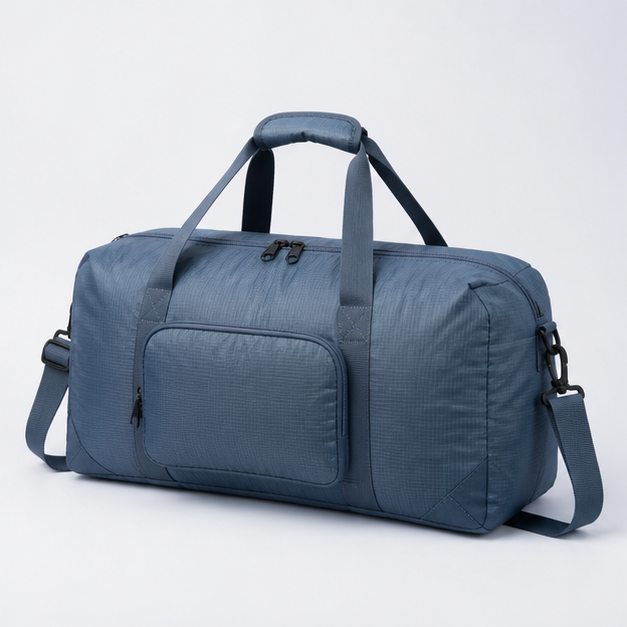
An OEM underseat travel tote direction for travel brands, hospitality programs and private-label accessory procurement. Define the intended personal-item packing list before confirming the body proportion, opening, pocket map and carry setup.
Look closer at the construction
Use the open interior and detail views to specify the main compartment, carry points and top opening.
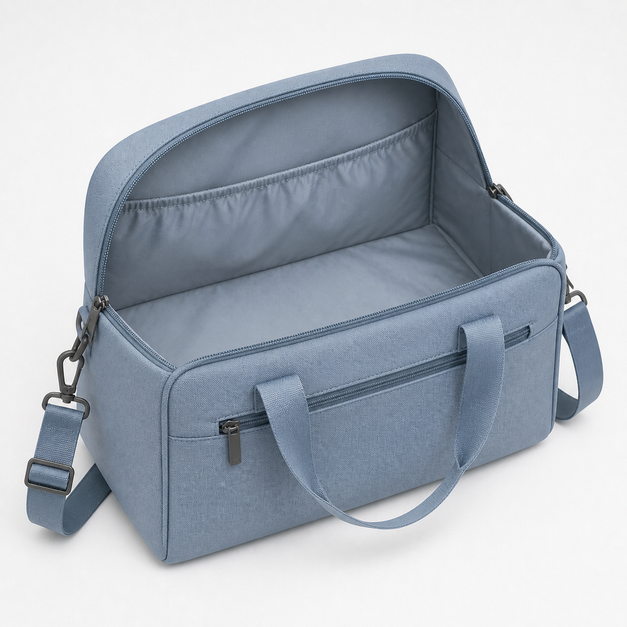
Open main compartment
The opened reference shows one large empty main compartment and a single elastic side pocket. Set the pocket position around the intended packing brief.
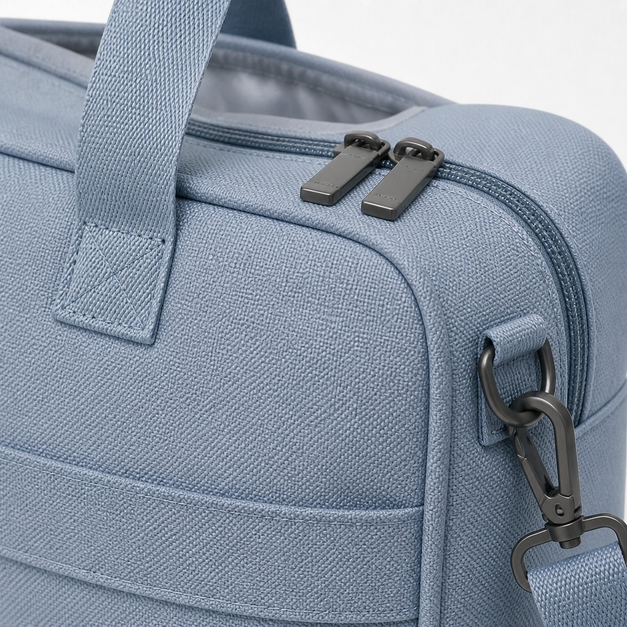
Two-way top zipper
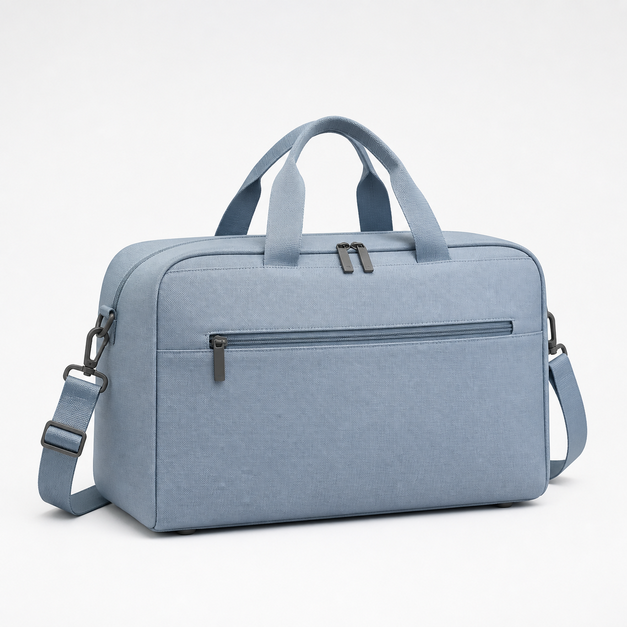
Short handles and detachable shoulder strap
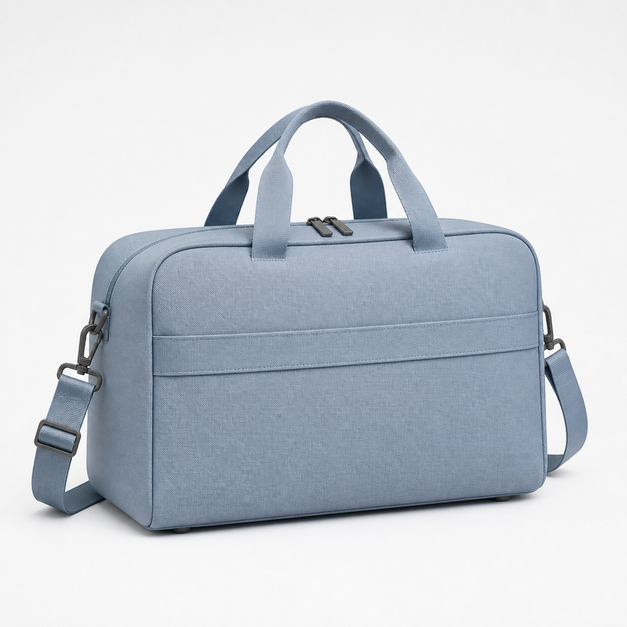
Front zipper pocket and rear trolley sleeve
Main compartment with one side elastic pocket
Zipper and handle finishing
Review the mist blue shell direction, two-way zipper, handle attachment, shoulder-strap hardware and seam finishing as one configurable construction package.
Mist blue woven textile direction
Coordinating light lining direction
Reference visuals, not production approval. Features, construction and any performance requirement must be confirmed on your sample.
MATERIAL BUILD
Underseat travel tote materials
The listed materials are an editorial starting direction for the Cabin Underseat Travel Tote. Confirm the actual shell, lining, zipper, webbing and support during development.
Outer material
Reference directionMist blue woven textile direction
Review a physical swatch for shade, hand feel, body drape and decoration compatibility before approving the shell specification.
Lining & inner finish
Reference directionCoordinating light lining direction
Set the lining shade, elastic-pocket edge and interior seam finish around the intended packing brief.
Support & structure
Reference directionTo be defined with your sample
Agree the balance between a soft body and a stable rectangular base after reviewing the filled sample.
The close-up belongs to this editorial design reference. It does not verify fiber composition, coating, certification, cabin compliance or other performance.
Treat each option as a development decision for the travel accessory program, not a fixed specification or airline-fit claim.
Customization options
Body proportion and opening
Handle and shoulder-strap configuration
Pocket and trolley-sleeve layout
Branding placement
Size & layout
Provide the intended personal-item packing list and mark the body proportion, top opening, front pocket, rear sleeve and elastic-pocket position.
Materials & trims
Confirm the mist blue shell, lining, two-way zipper, handles, removable strap and hardware through swatches and sampling rather than relying on the image.
Brand & packaging
Supply artwork, decoration method, placement and packing instructions. Approve the final appearance on the agreed sample.
FUNCTIONAL DETAILS
Underseat travel tote design decisions
Use these checks to turn the Cabin Underseat Travel Tote reference into a specific project brief.
01
Top opening and body proportion
Set the two-way zipper path and rectangular body around the intended packing list rather than assuming a universal travel fit.
Buyer questionWhich packed items must pass comfortably through the opening?
02
Hand and shoulder carry
Review handle drop, detachable-strap attachment and loaded balance together on the sample.
Buyer questionWhich carry method is primary for the intended program?
03
Rear trolley sleeve
Define sleeve width, position and edge reinforcement against the project brief without implying compatibility with every luggage handle.
Buyer questionWhich trolley-handle reference should guide the sleeve?
Discuss changes before the pattern is finalized. The pictured configuration is an editorial reference, not the final specification or a cabin-fit approval.
YOUR DEVELOPMENT PROCESS
Developing your underseat travel tote
A practical sequence for developing the Cabin Underseat Travel Tote around an agreed personal-item packing brief.
01
Define what must fit
Your input
Provide the intended packing list, carry preferences, trolley-handle reference and branding requirements.
Review output
An agreed contents brief and development priorities for the reference.
02
Choose the material set
Your input
Review shell, lining, zipper, webbing and hardware directions against the preferred appearance and body structure.
Review output
Material and trim choices recorded for sampling.
03
Review the first sample
Your input
Pack the intended items and review top access, hand carry, shoulder carry, pocket access and the rear sleeve.
Review output
Written fit and construction comments with required revisions.
04
Approve the complete version
Your input
Confirm revised dimensions, artwork placement, materials, colors and every agreed change.
Review output
An approved sample and specification for the order.
05
Set the bulk checks
Your input
Agree measurement, construction and appearance checkpoints; define separate testing only when required by the brief.
Review output
A checklist tied to the approved version.
06
Confirm packing & dispatch
Your input
Specify packing, labels, carton information and dispatch requirements.
Review output
Agreed packing details and shipment coordination.
SamplingConfirmed after the specification is agreed
Bulk productionConfirmed after sample approval and order review
Timing is confirmed for the agreed specification, revisions, material availability and production schedule.