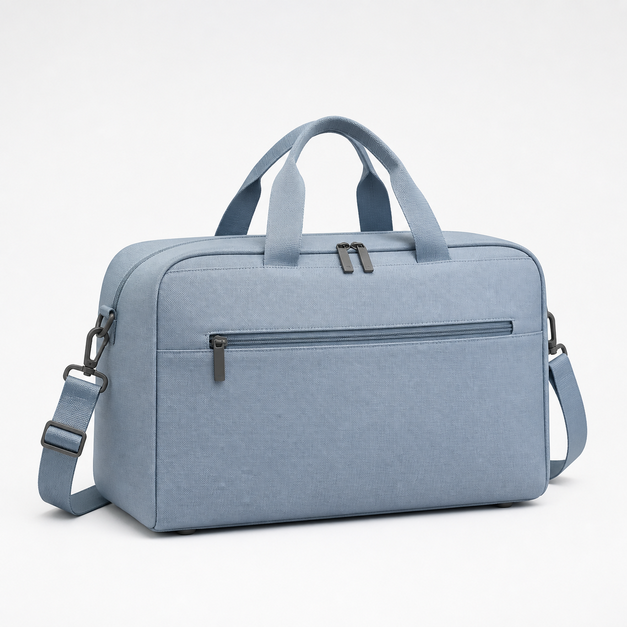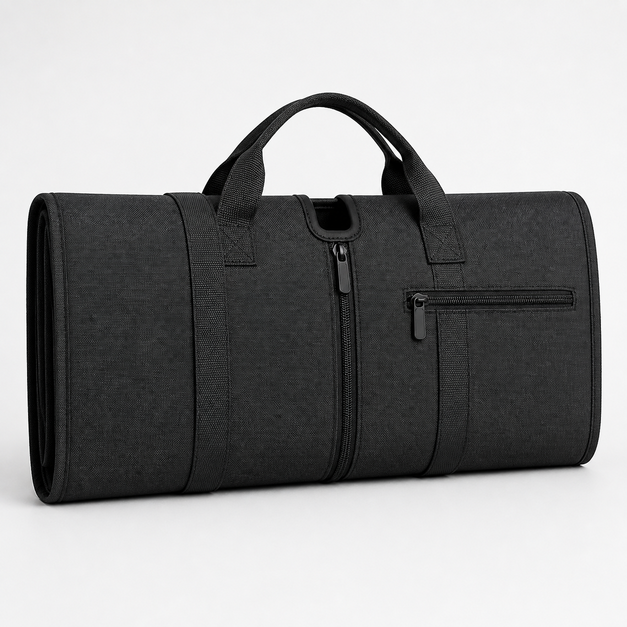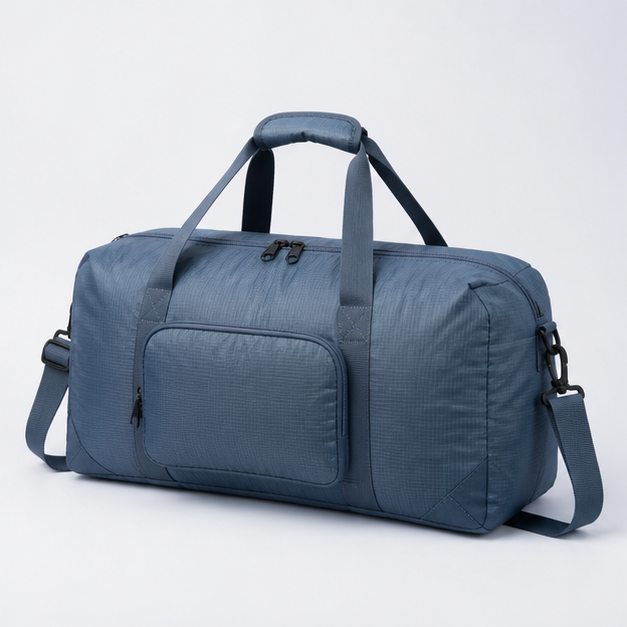
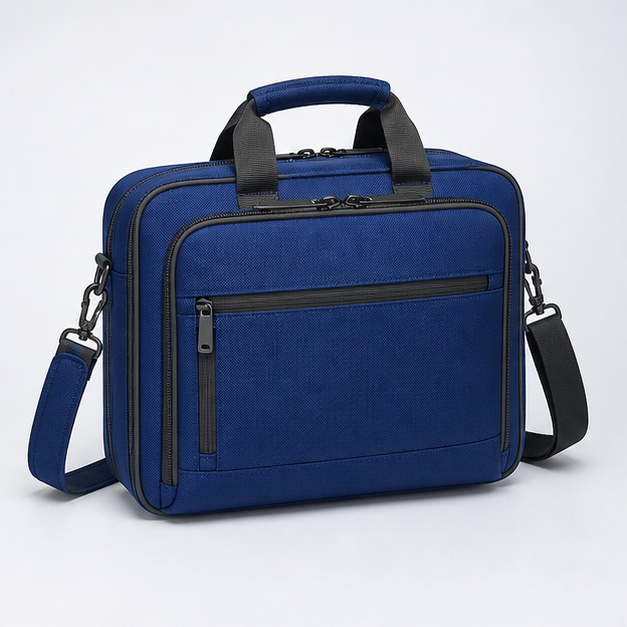
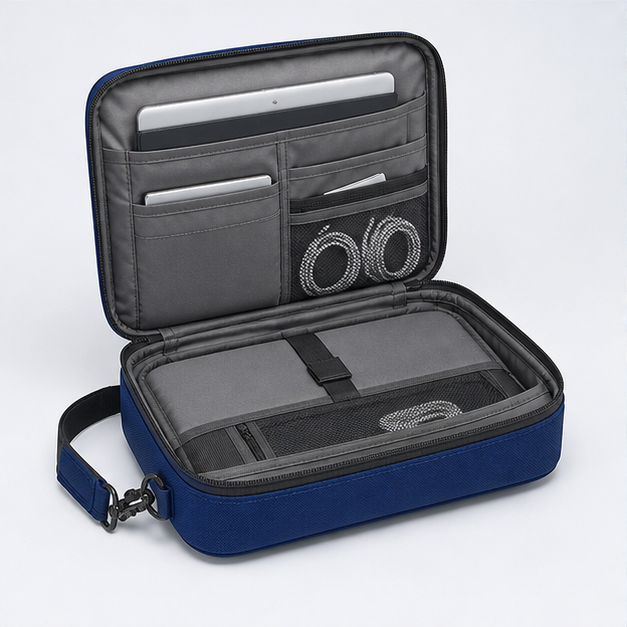
Internal organization
The clamshell opening allows packing zones to be planned on both sides. Use the open view to mark dividers, retention and quick-access needs.
- Clamshell opening
- Packing dividers
- Trolley sleeve
Carry-On Organizer · Travel-brand hand-luggage OEM programs
Design reference for customization; final details subject to sampling.
Made-to-order B2B production. Specifications are confirmed through sampling.
An OEM clamshell carry-on travel bag, rather than a packing cube placed inside other luggage. Review dividers, trolley-sleeve fit and loaded dimensions. Airline size limits must be checked for the intended service.
Use the interior and detail views to discuss your changes.
The clamshell opening allows packing zones to be planned on both sides. Use the open view to mark dividers, retention and quick-access needs.
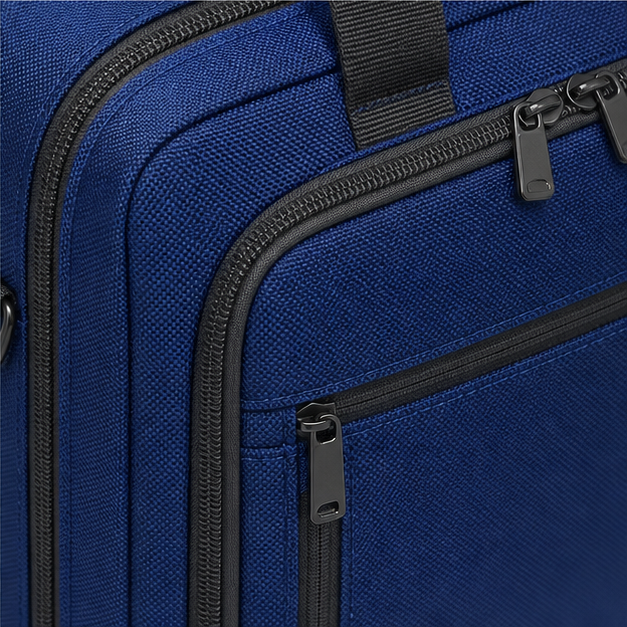
Review the body fabric, zipper, webbing and attachment details together. Carry load and packing habits should inform the final material and reinforcement specification.
Reference visuals, not production approval. Features, construction and any performance requirement must be confirmed on your sample.
MATERIAL BUILD
The listed materials are the starting direction for Carry-On Organizer. Review the shell, inside finish and support together before approving the production specification.
Reference directionCoated polyester
Coated polyester is a reference surface direction. Confirm the required finish and flexibility at the clamshell fold; no waterproof claim is implied.
Reference directionPolyester lining
Polyester lining and divider fabric should be reviewed as a set. Specify which panels need opacity, mesh visibility or soft contact surfaces.
Reference directionTo be defined with your sample
Review zipper path, handle attachment and divider support around the loaded dimensions. The product name does not guarantee compliance with an airline allowance.
The close-up belongs to this design reference. It does not verify fiber composition, coating, recycled content or performance.
Tell us what should stay, what should change and which details matter most to your program. Options below are discussion points, not a fixed configuration.
FUNCTIONAL DETAILS
Use these checks to turn the Carry-On Organizer reference into a clear development brief.
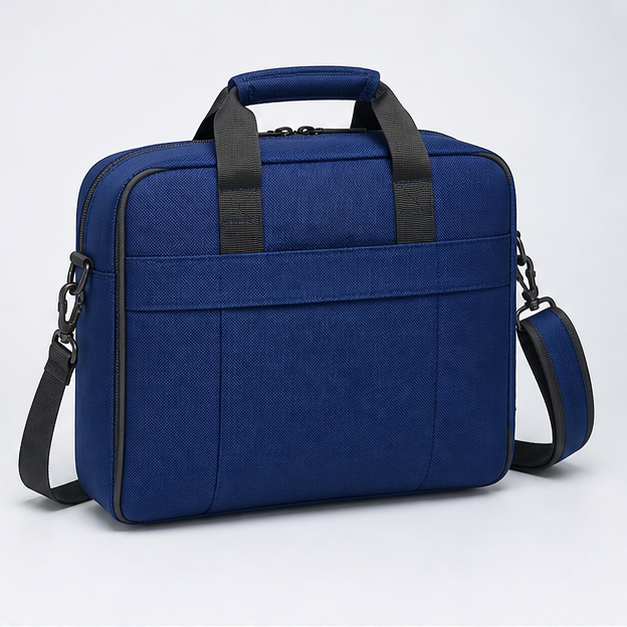
Agree how far the case opens and how contents are retained on each side. Check whether both halves can be accessed on the available surface.
Buyer questionWill it be opened flat on a desk or on luggage?
Choose whether dividers separate clothing, documents or electronics. Retention and padding are different requirements and should be specified separately.
Buyer questionWhich items must stay in place when the case opens?
Loaded dimensions and a requested trolley sleeve need physical checks. A reference size is not an airline approval or a universal handle fit.
Buyer questionWhat packed size and handle spacing must the sample meet?
Discuss changes before the pattern is finalized. The pictured configuration is not the final specification for your order.
YOUR DEVELOPMENT PROCESS
A practical sequence for developing Carry-On Organizer, with a clear input and review point at each stage.
SamplingTypically 7–10 days
Bulk productionTypically 30–45 days after approvals
Timing is a planning reference, subject to the agreed specification, material availability, revisions and production schedule.
Pack the proposed contents and check the fully loaded outside dimensions, including handles and bulging panels.
Confirm the trolley-sleeve fit and opening layout. Airline acceptance depends on the applicable carrier and fare rules.
Check artwork size, position, color, label wording and packing. Sign off the final specification and sample together before bulk production.
Travel brands, hospitality programs and private-label accessory procurement
Reference sizeSpecified to the project brief
View designApparel brands, uniform programs and travel accessory procurement
Reference sizeSpecified to the project brief
View designTravel-brand and wholesale luggage programs
Reference size52 × 30 × 22 cm
View design