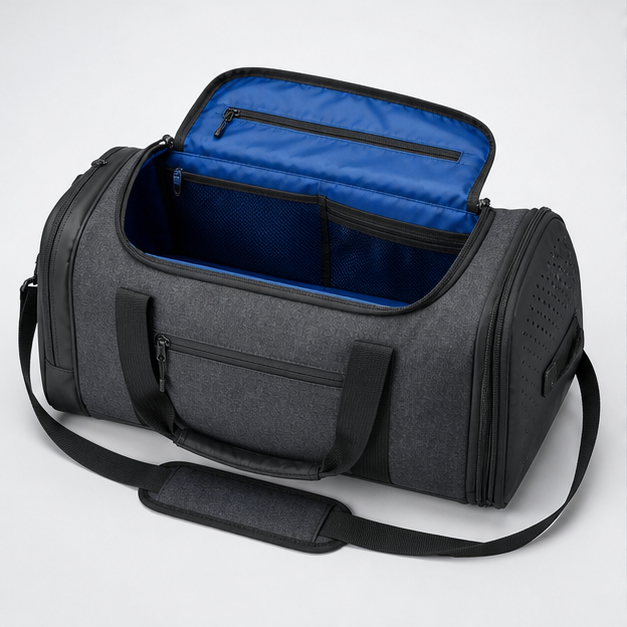
Internal organization
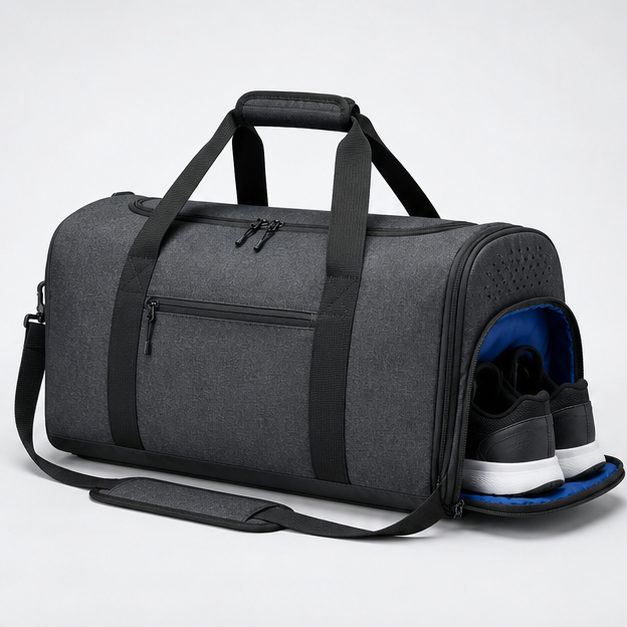
Separate shoe storage changes the usable main compartment. Review the relationship between the spaces with both sections filled, including any proposed damp-item pocket.
- Ventilated shoe compartment
- Wet pocket
- Shoulder strap
Shoe-Compartment Gym Bag · Fitness-brand and team-equipment procurement
Design reference for customization; final details subject to sampling.
Made-to-order B2B production. Specifications are confirmed through sampling.
An OEM gym bag with a separate shoe compartment for fitness and team ranges. Define the shoe size and training kit first, then review compartment access, pocket separation and carrying comfort.
Use the interior and detail views to discuss your changes.
Separate shoe storage changes the usable main compartment. Review the relationship between the spaces with both sections filled, including any proposed damp-item pocket.
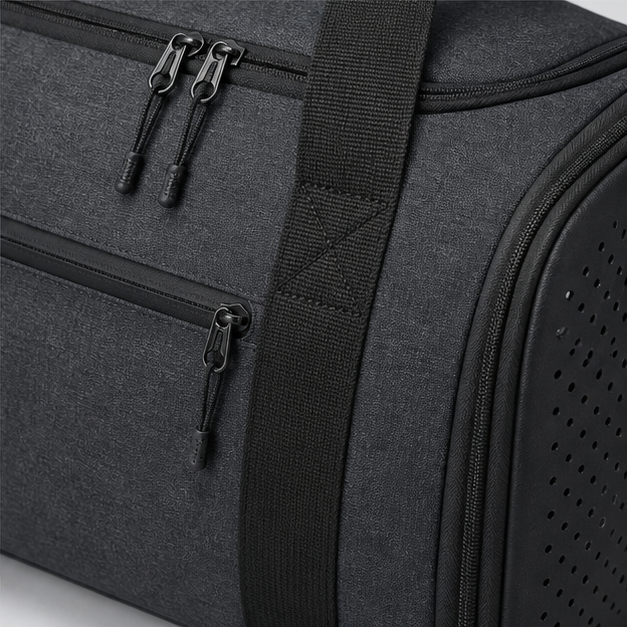
Review the body fabric, zipper, webbing and attachment details together. Carry load and packing habits should inform the final material and reinforcement specification.
Reference visuals, not production approval. Features, construction and any performance requirement must be confirmed on your sample.
MATERIAL BUILD
The listed materials are the starting direction for Shoe-Compartment Gym Bag. Review the shell, inside finish and support together before approving the production specification.
Reference direction600D polyester
Use the 600D polyester reference to discuss body shape, color and backing. Review the shell near the shoe opening and handle attachments.
Reference direction210D lining
The 210D lining and any wet-item pocket should have separately agreed finishes. A separate pocket does not establish leakproof performance.
Reference directionTo be defined with your sample
The shoe compartment consumes part of the main body volume. Define its boundary and any vent treatment before approving the overall capacity.
The close-up belongs to this design reference. It does not verify fiber composition, coating, recycled content or performance.
Tell us what should stay, what should change and which details matter most to your program. Options below are discussion points, not a fixed configuration.
FUNCTIONAL DETAILS
Use these checks to turn the Shoe-Compartment Gym Bag reference into a clear development brief.
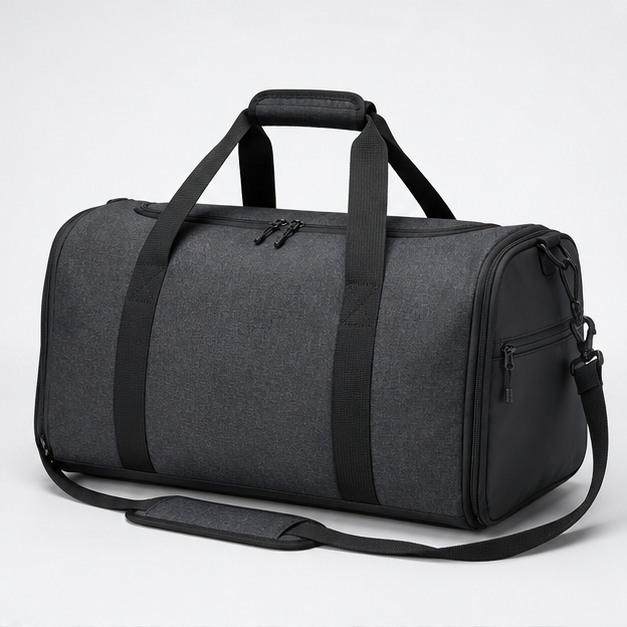
Size the shoe section using the actual footwear and allow for insertion. Review the remaining main-compartment space with the shoes inside.
Buyer questionWhat is the largest shoe size in the target range?
Agree vent location and construction with the shoe pocket. Ventilation intent is not a measured airflow or odor-control claim.
Buyer questionWhere should ventilation be positioned?
Specify the items this pocket is intended to carry and how it closes. Any liquid-containment requirement needs its own material and seam review.
Buyer questionIs simple separation enough, or is a tested containment requirement needed?
Discuss changes before the pattern is finalized. The pictured configuration is not the final specification for your order.
YOUR DEVELOPMENT PROCESS
A practical sequence for developing Shoe-Compartment Gym Bag, with a clear input and review point at each stage.
SamplingTypically 7–10 days
Bulk productionTypically 30–45 days after approvals
Timing is a planning reference, subject to the agreed specification, material availability, revisions and production schedule.
Pack the intended footwear and main kit together; check that one compartment does not consume the other.
Specify ventilation and wet-pocket construction separately. A dedicated compartment does not itself guarantee odor or leak containment.
Check artwork size, position, color, label wording and packing. Sign off the final specification and sample together before bulk production.
Travel brands, hospitality programs and private-label accessory procurement
Reference sizeSpecified to the project brief
View designApparel brands, uniform programs and travel accessory procurement
Reference sizeSpecified to the project brief
View design